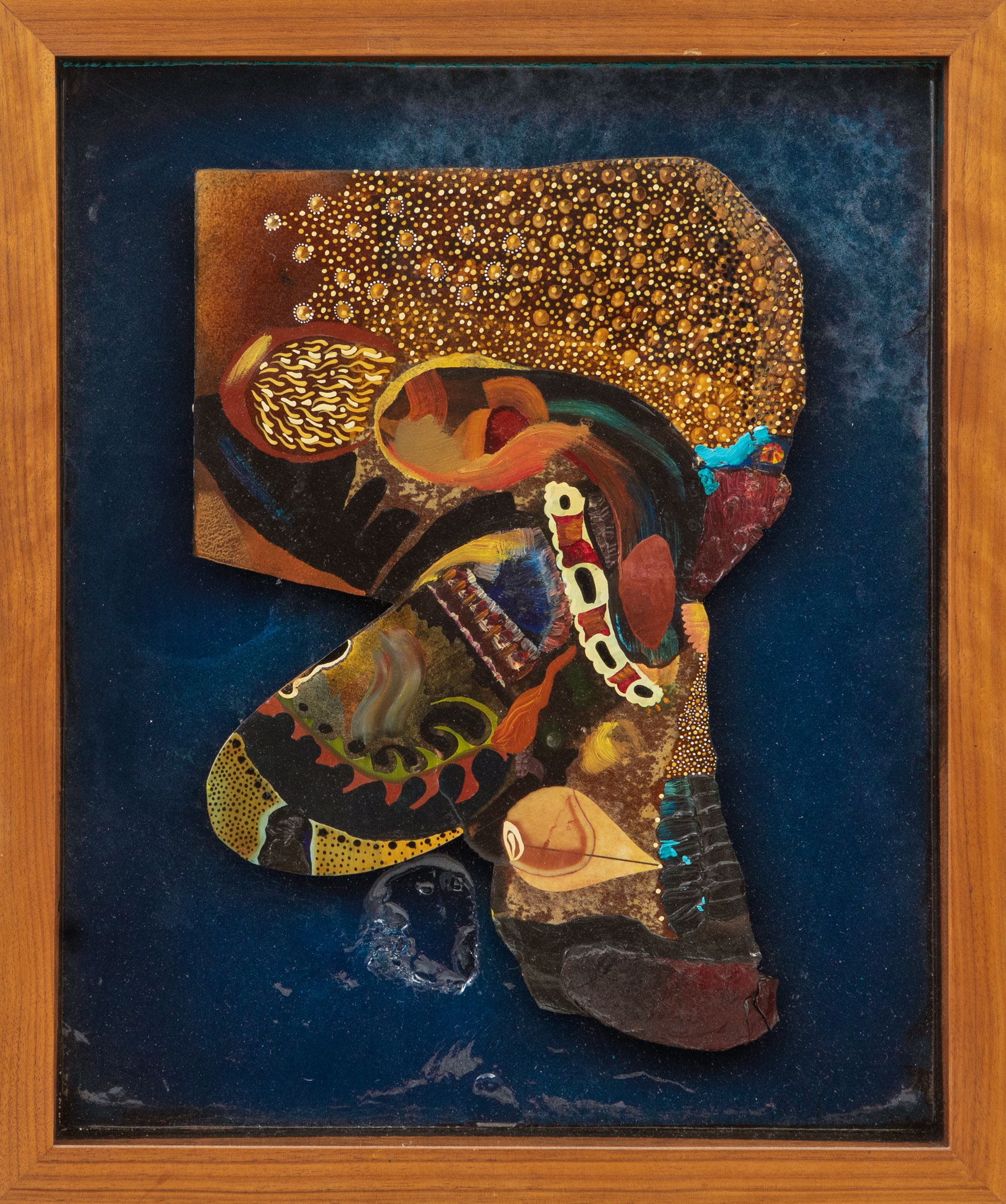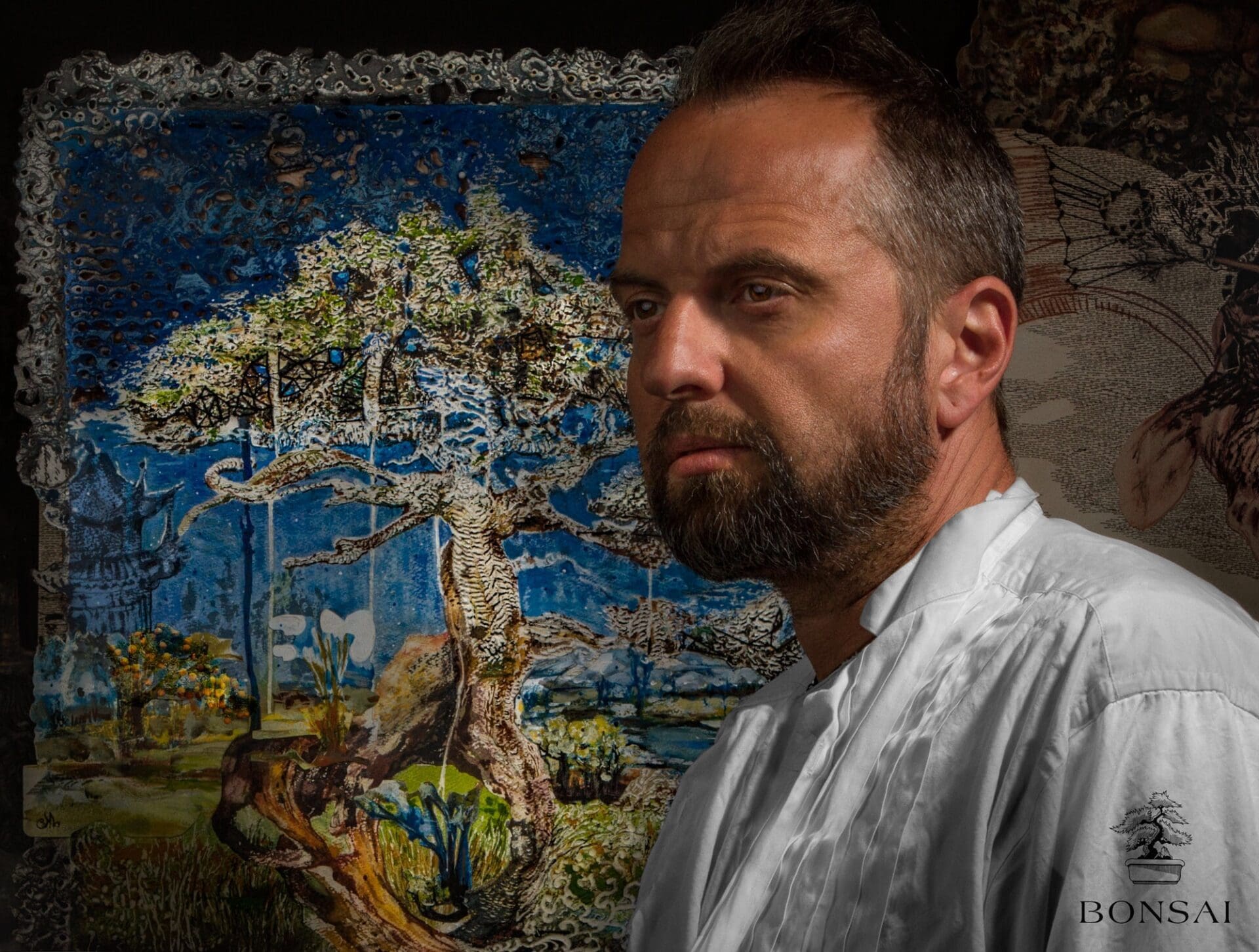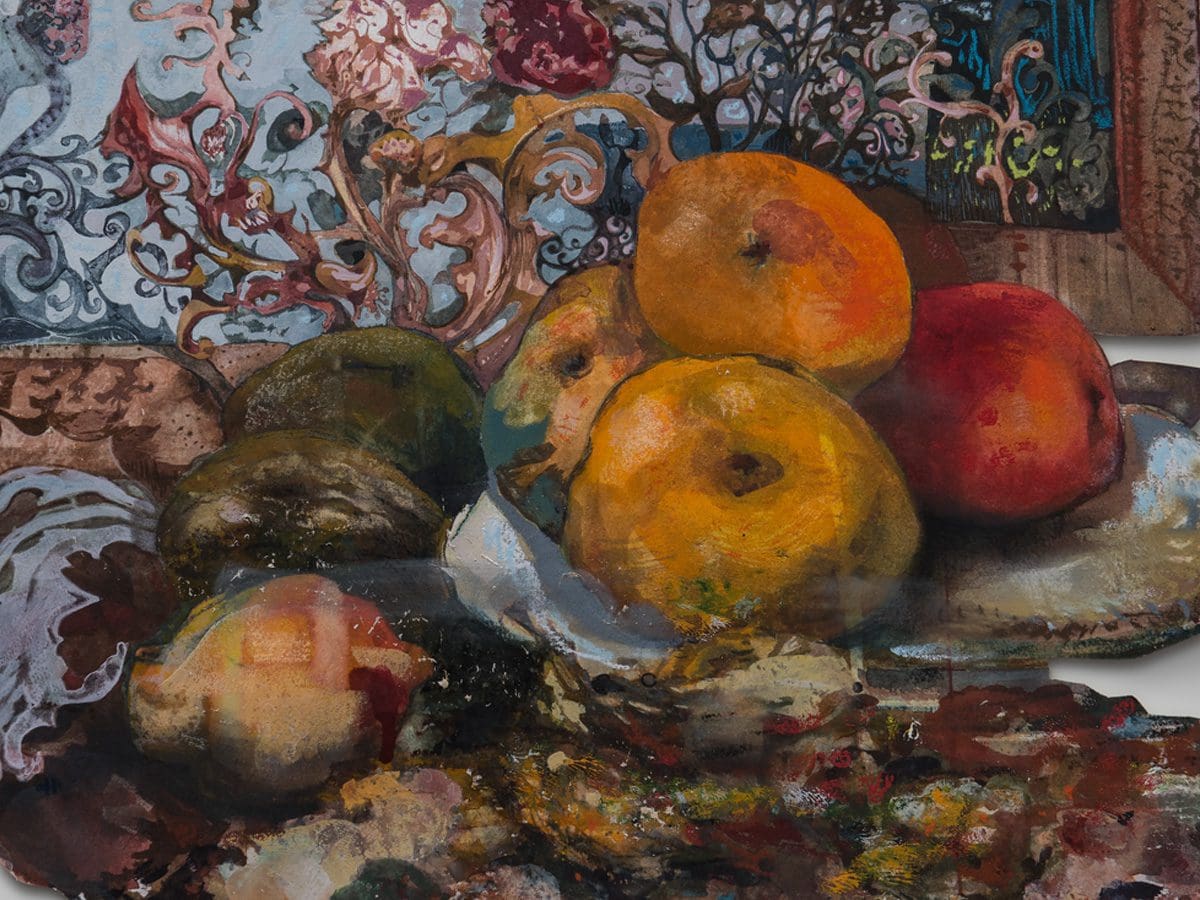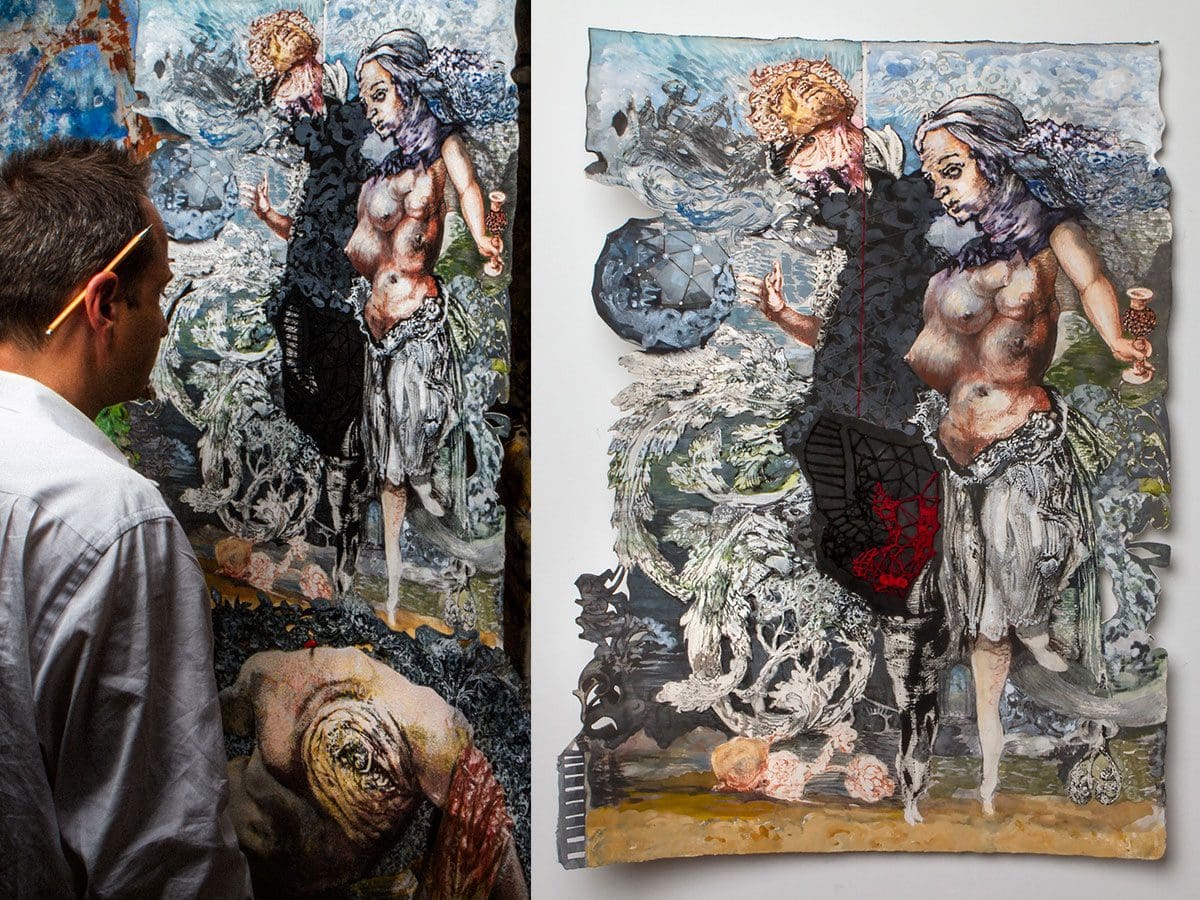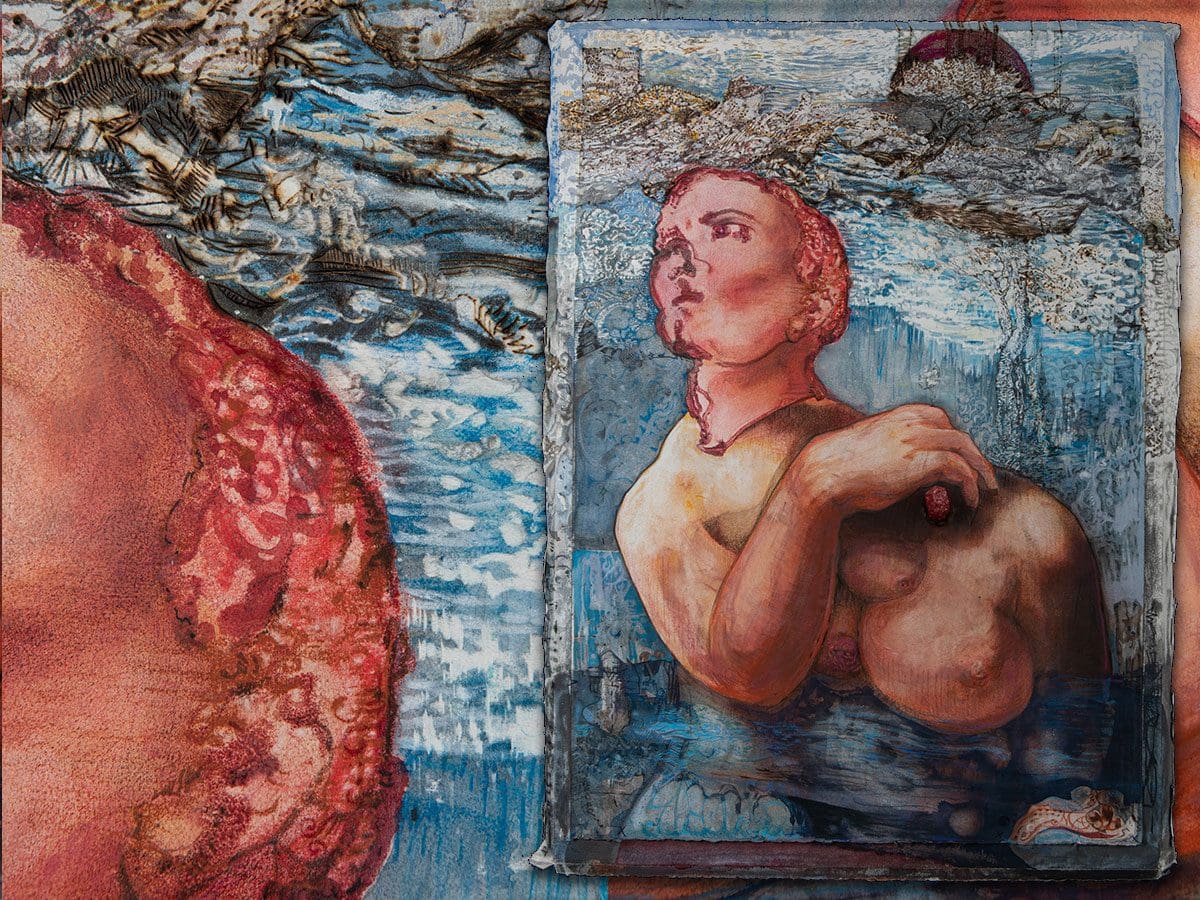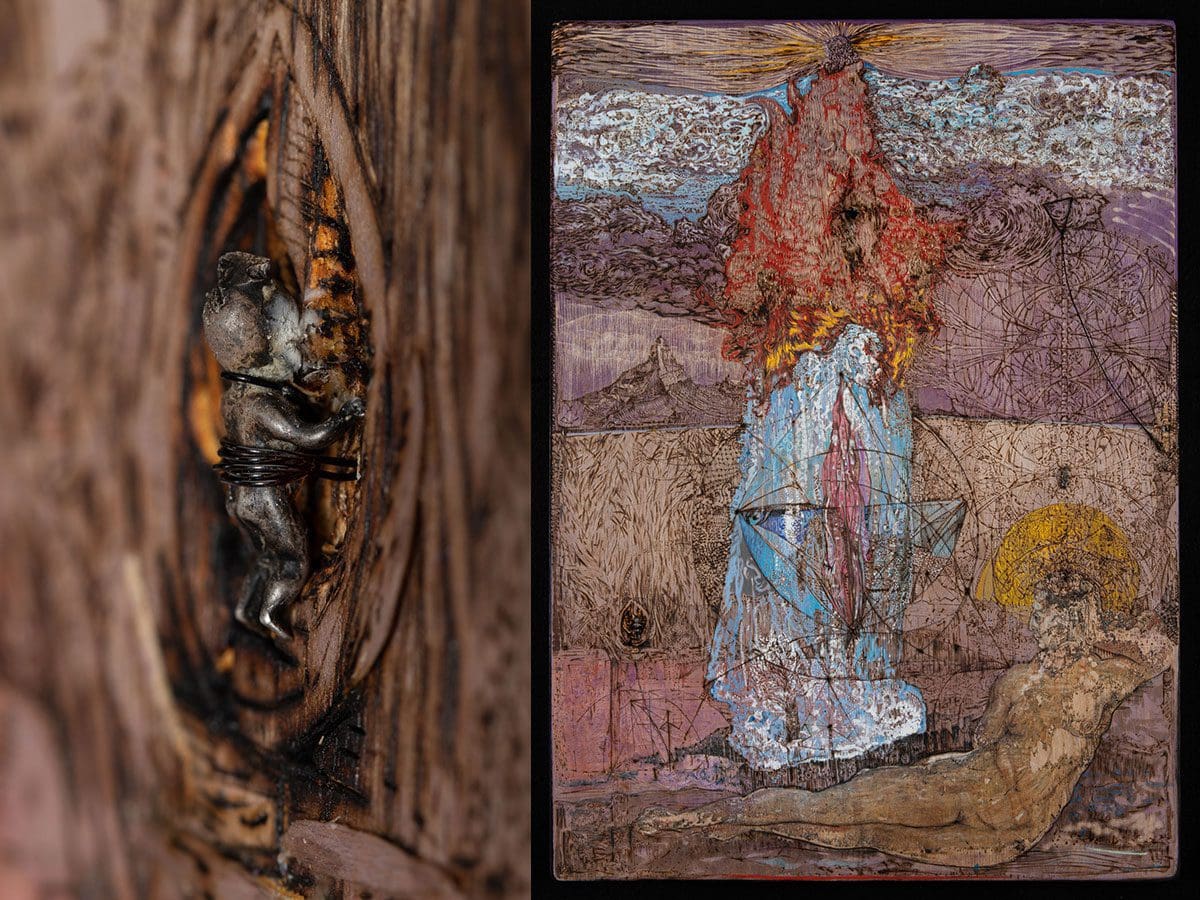
The Greeks take their clothes off more than we do. It is the mark of a hero, not about representing the literal world, but rather a mythologized world.
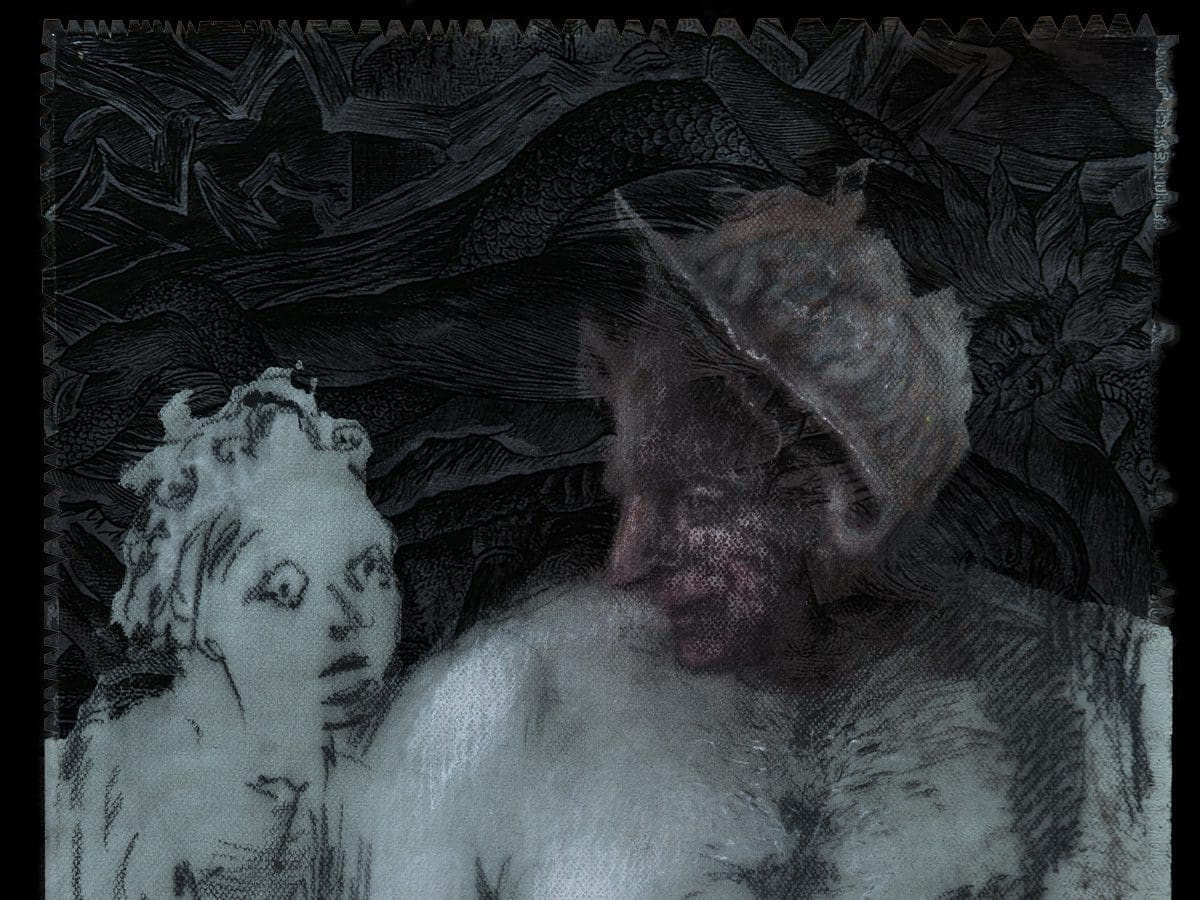
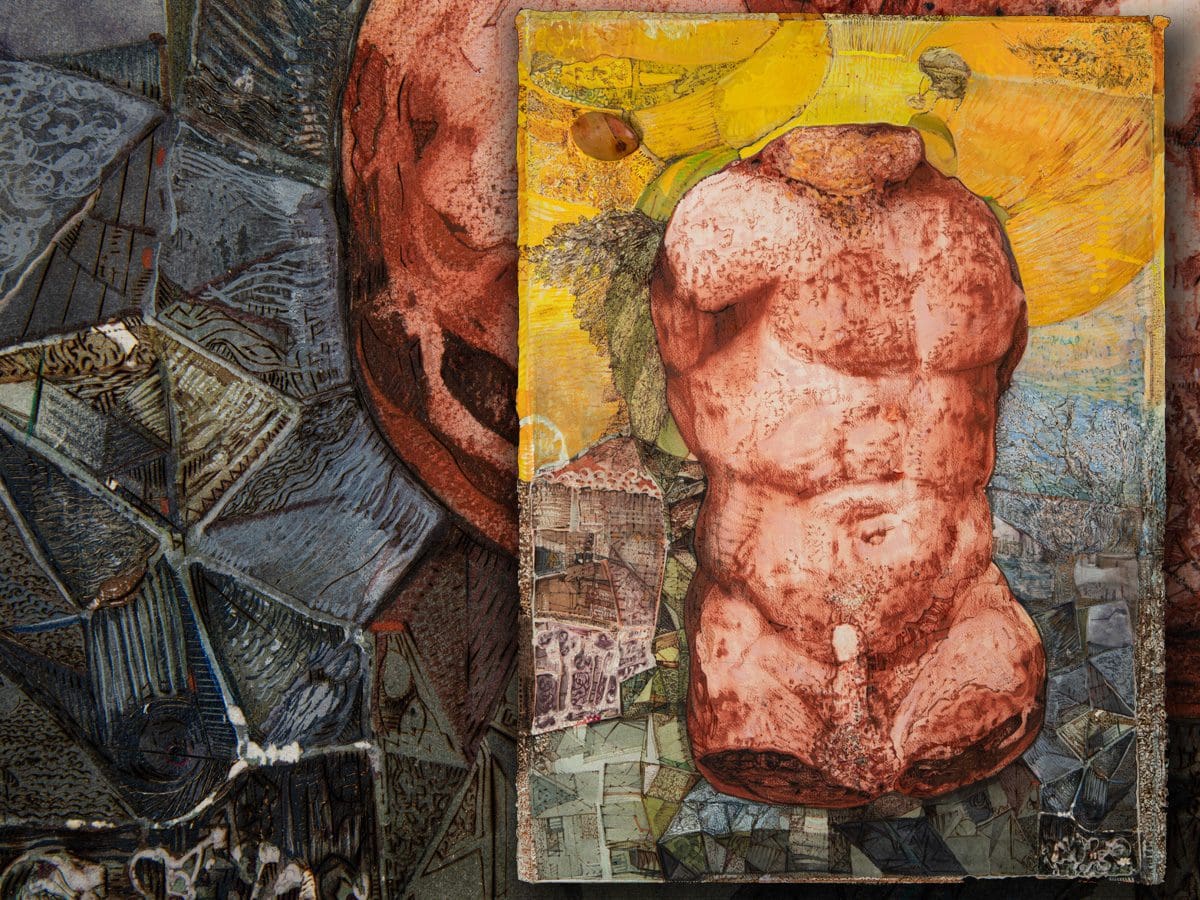
The river god’s taut musculature, expressive limbs, and windblown hair are modelled with extraordinary vigour. Oh wait – his head is missing.
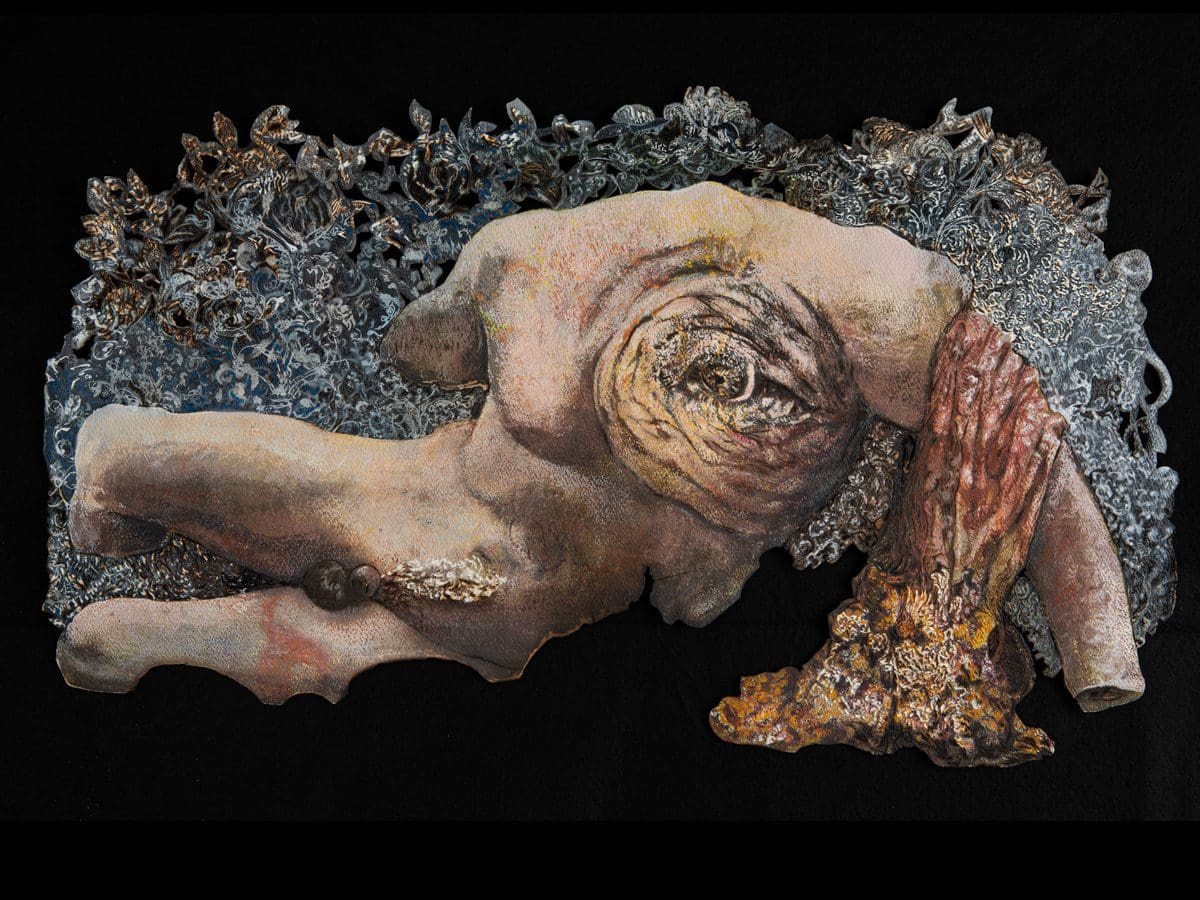
The River-God is usually depicted in one of three forms: as a man-headed bull; a bull-horned man with the tail of a serpentine-fish in place of legs; or as a reclining man with an arm resting upon a pitcher pouring water. Here he is represented with a giant elephant eye in the centre of his trunk.
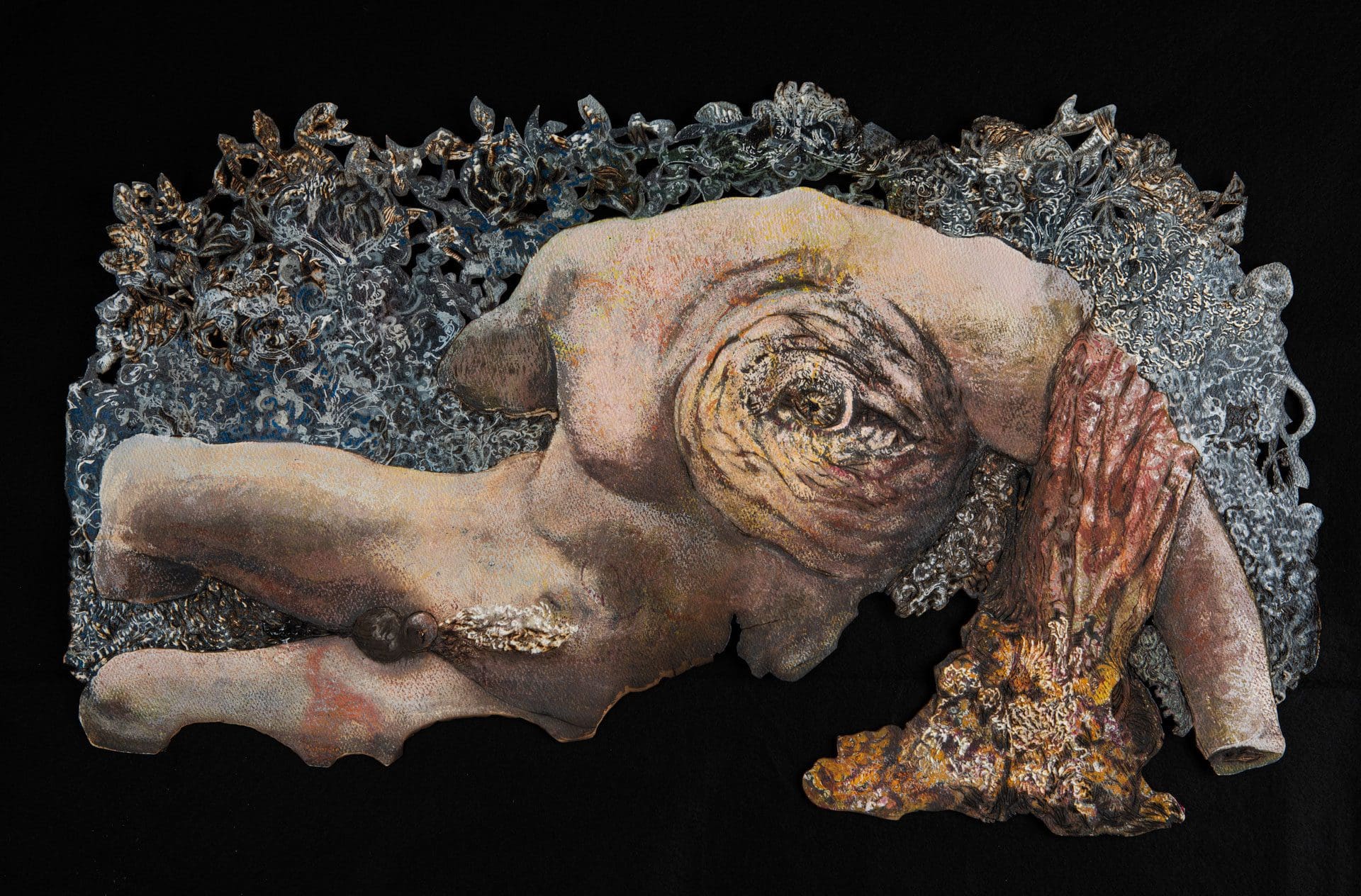
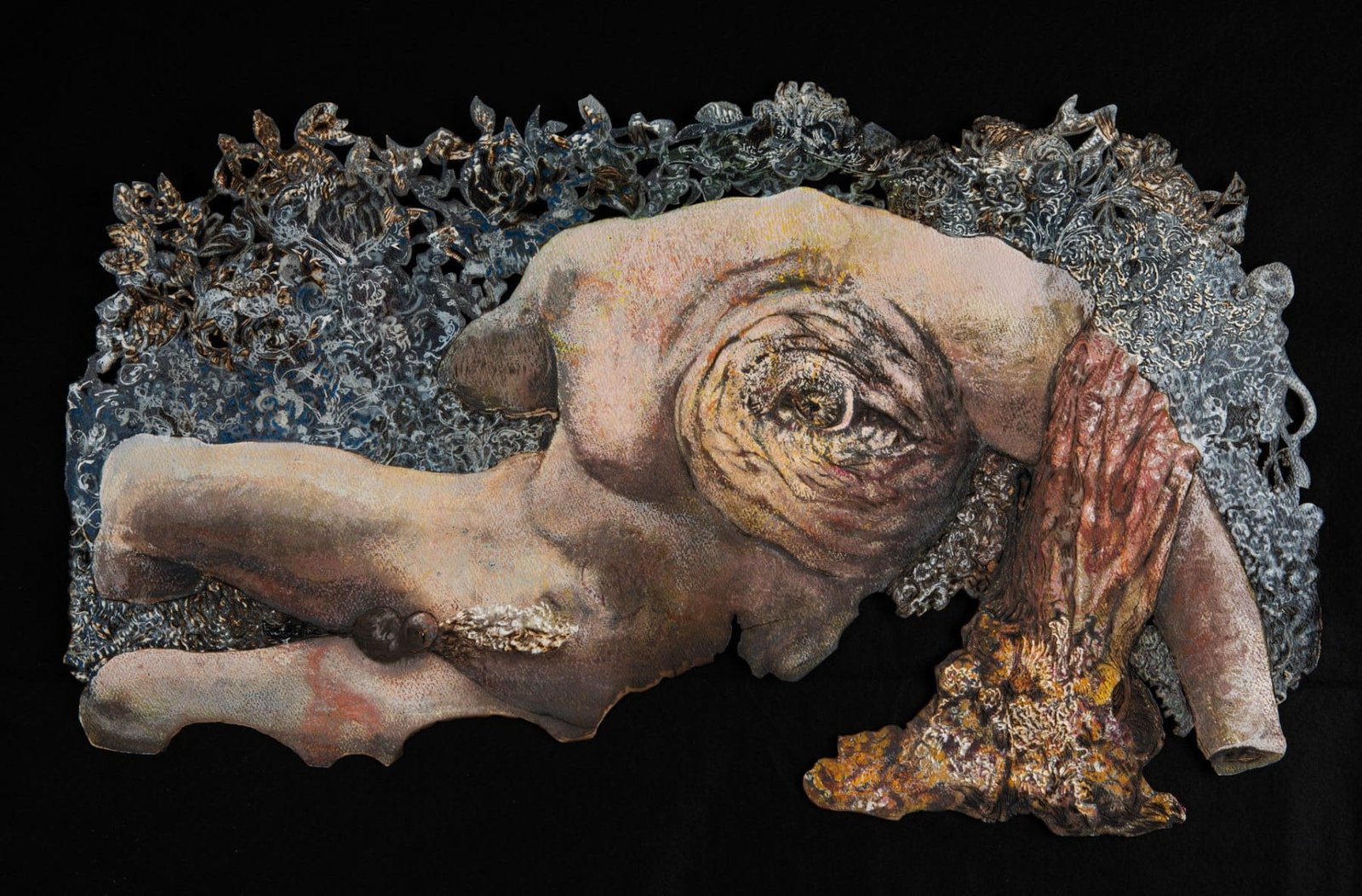
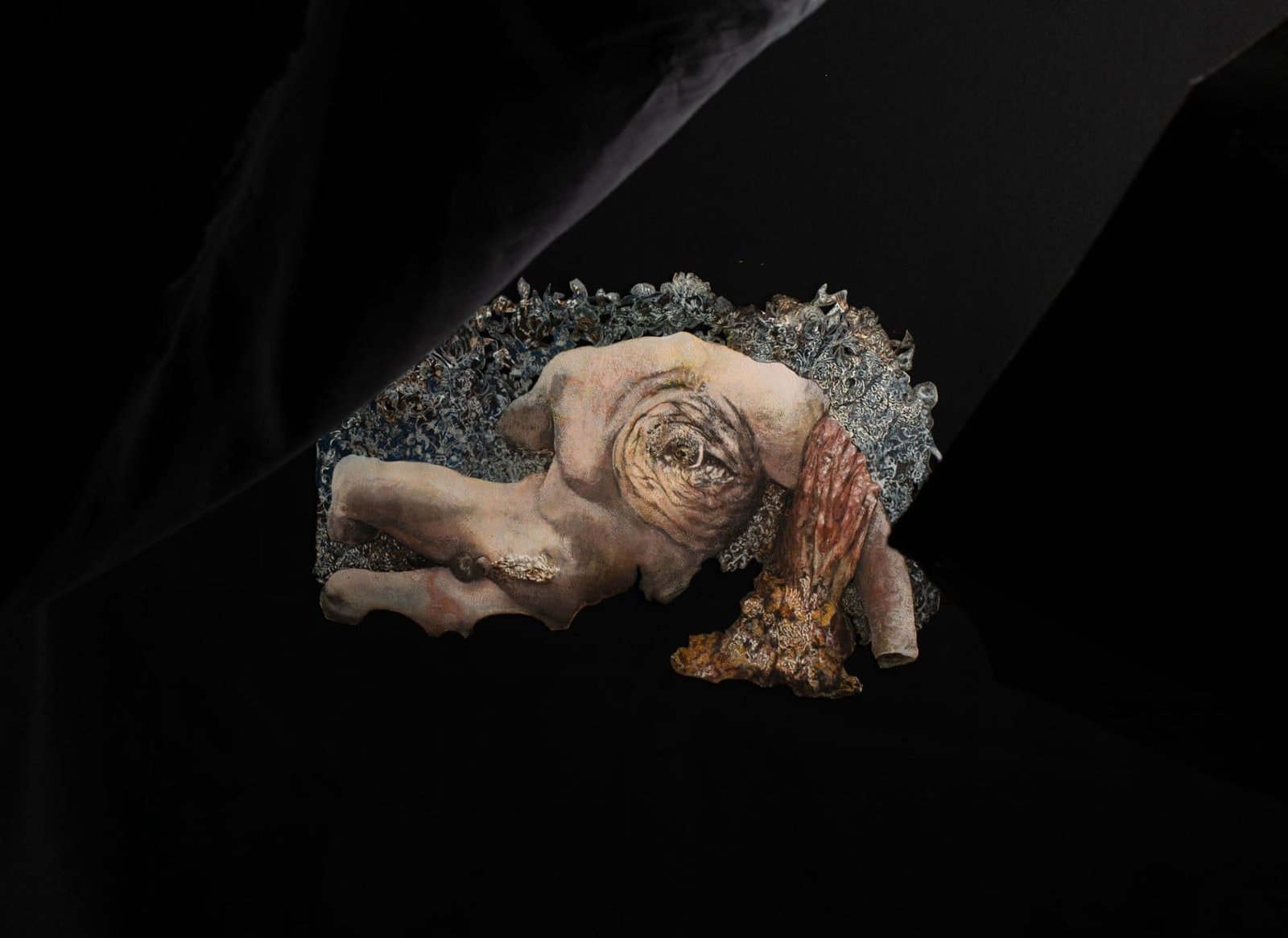
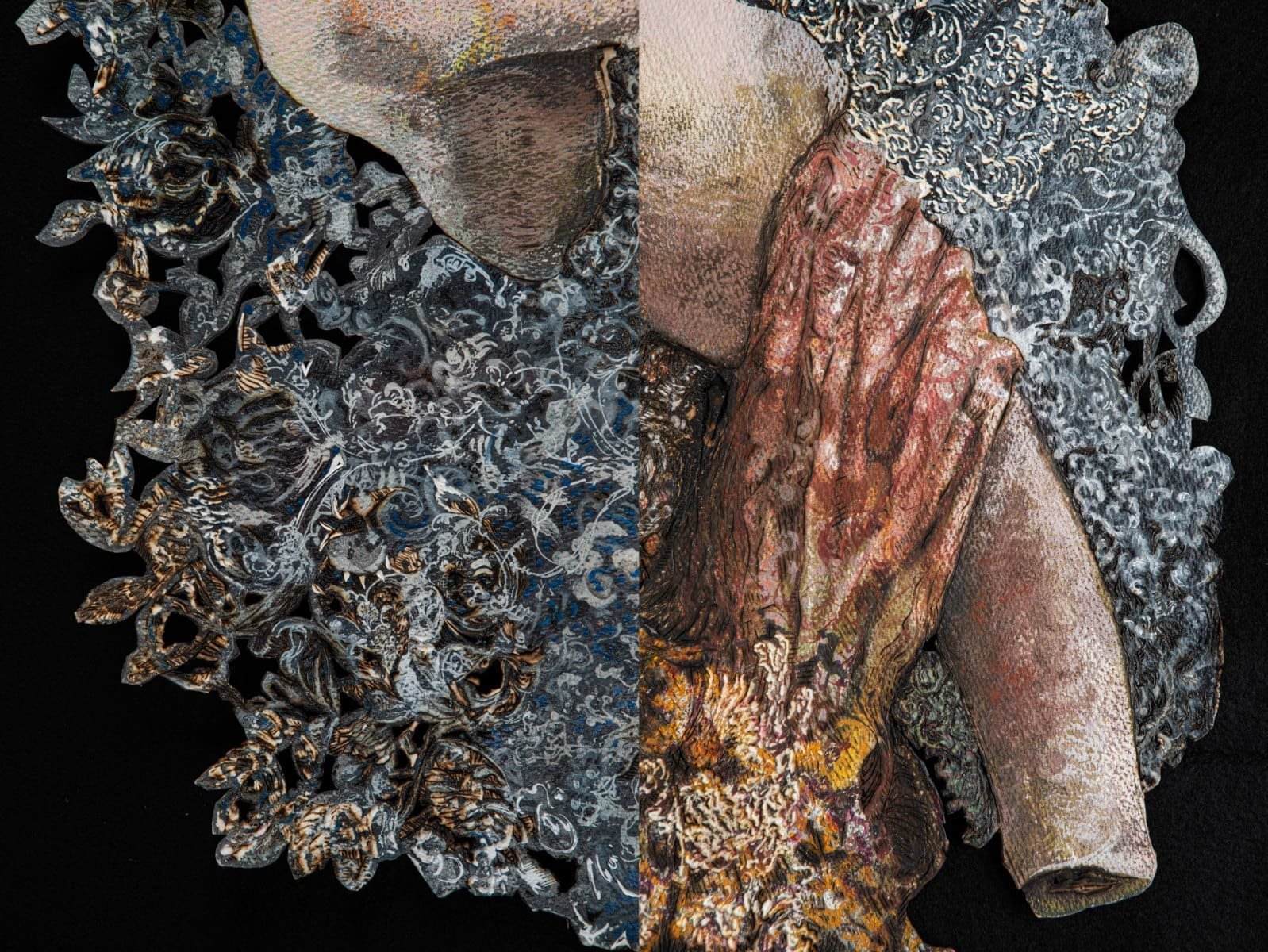
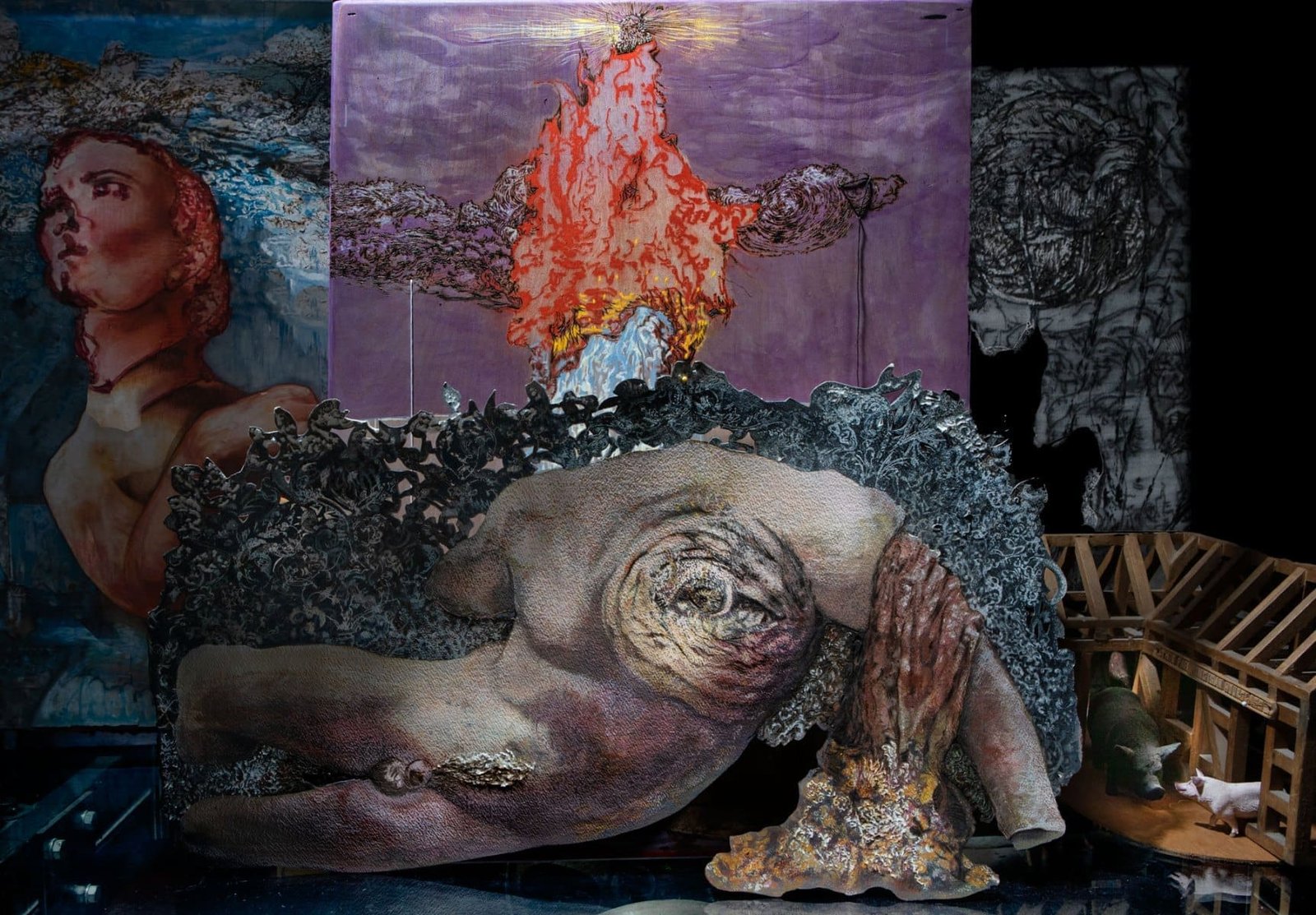
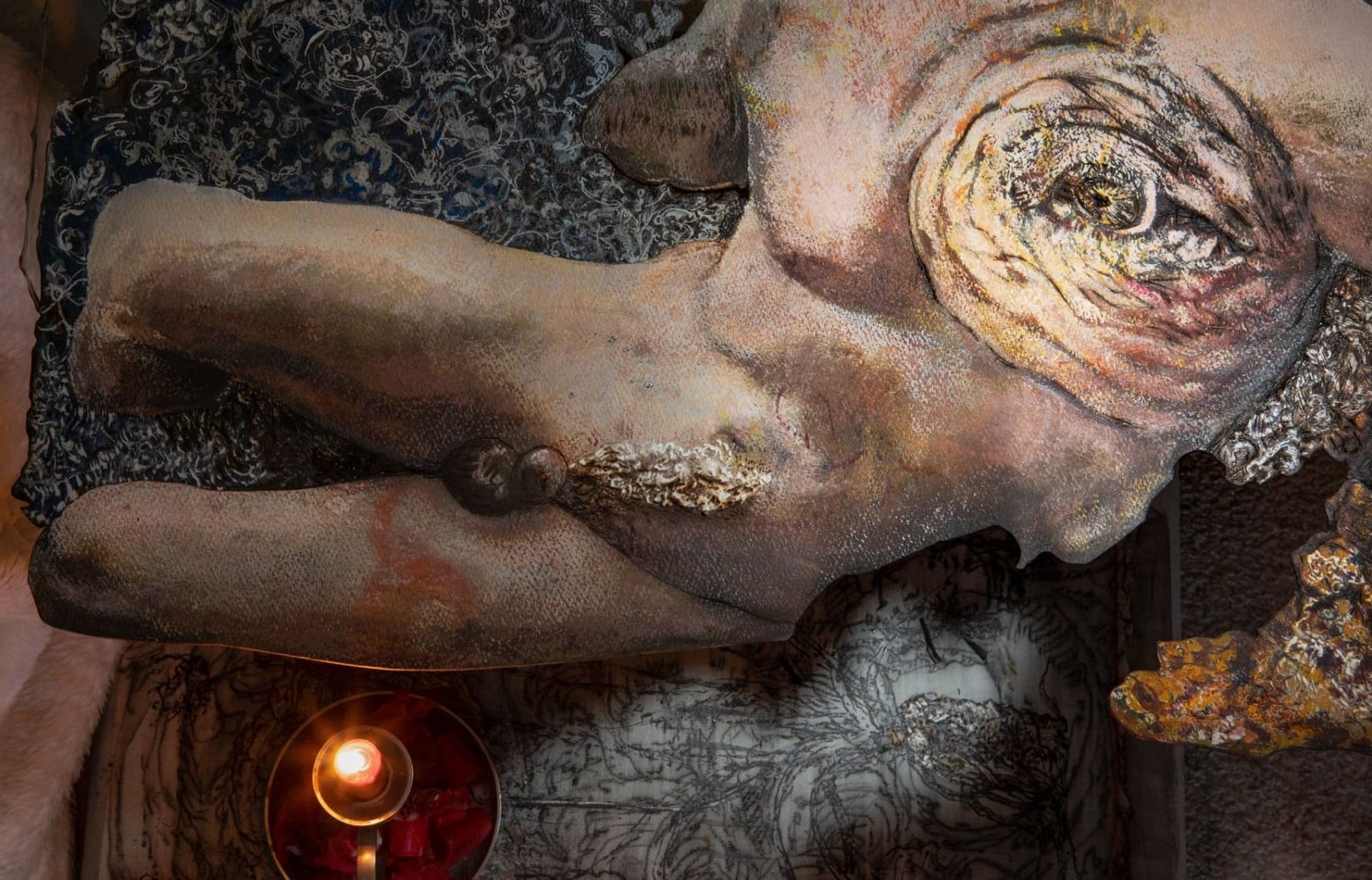
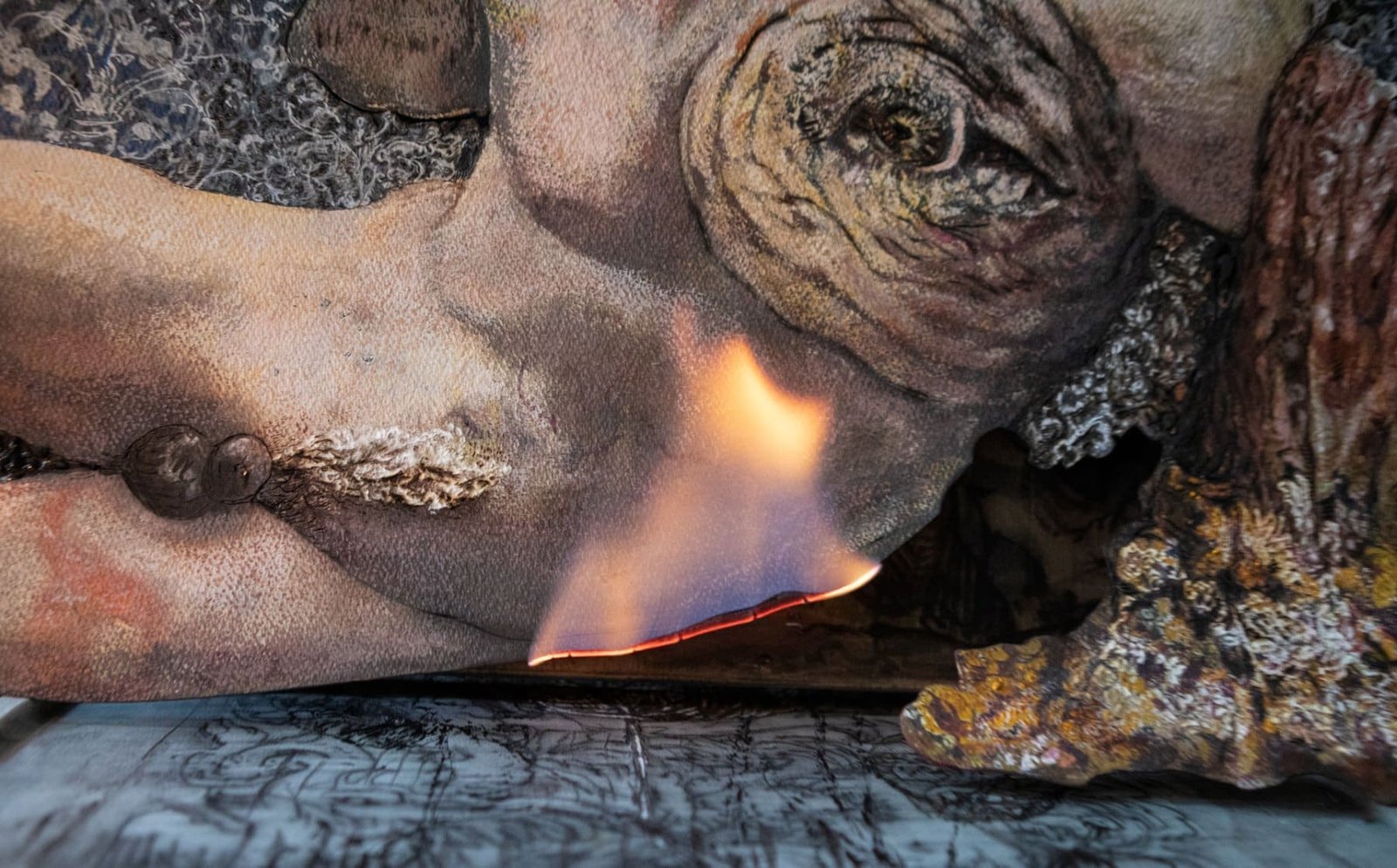
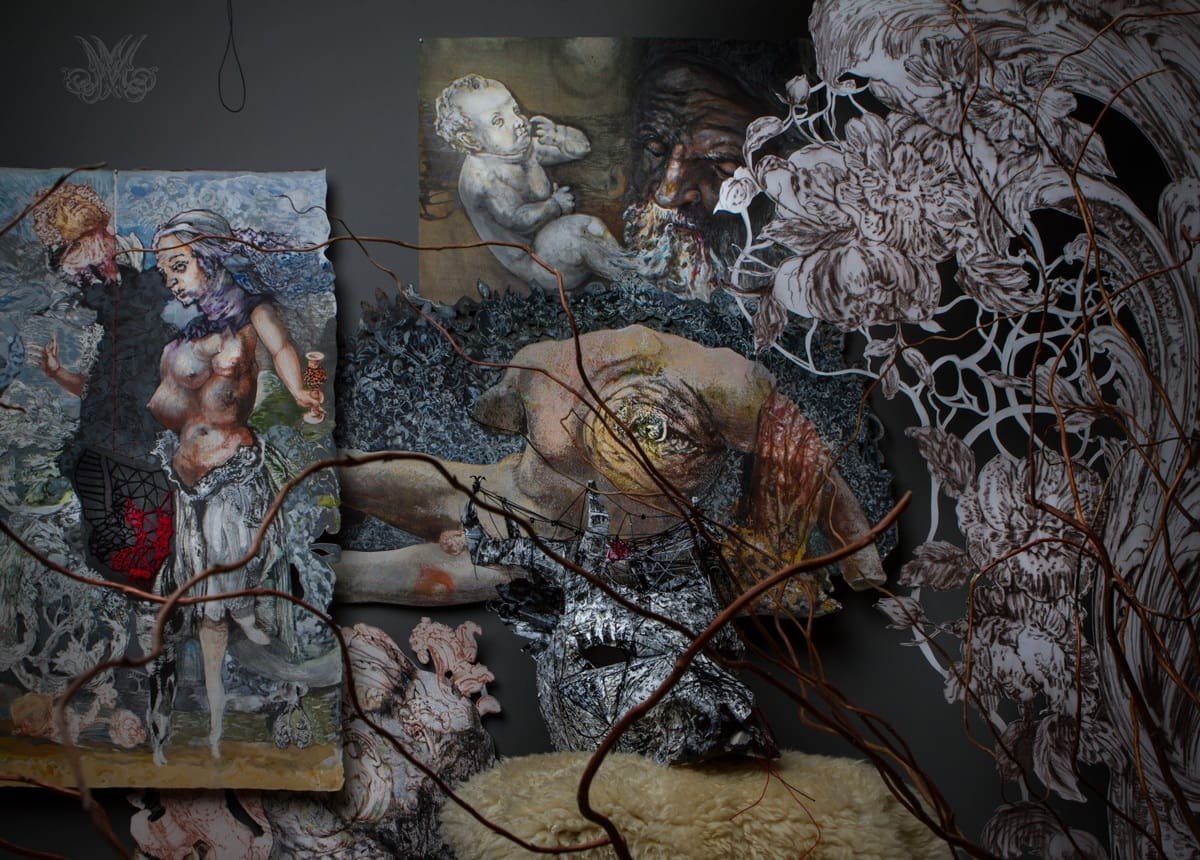
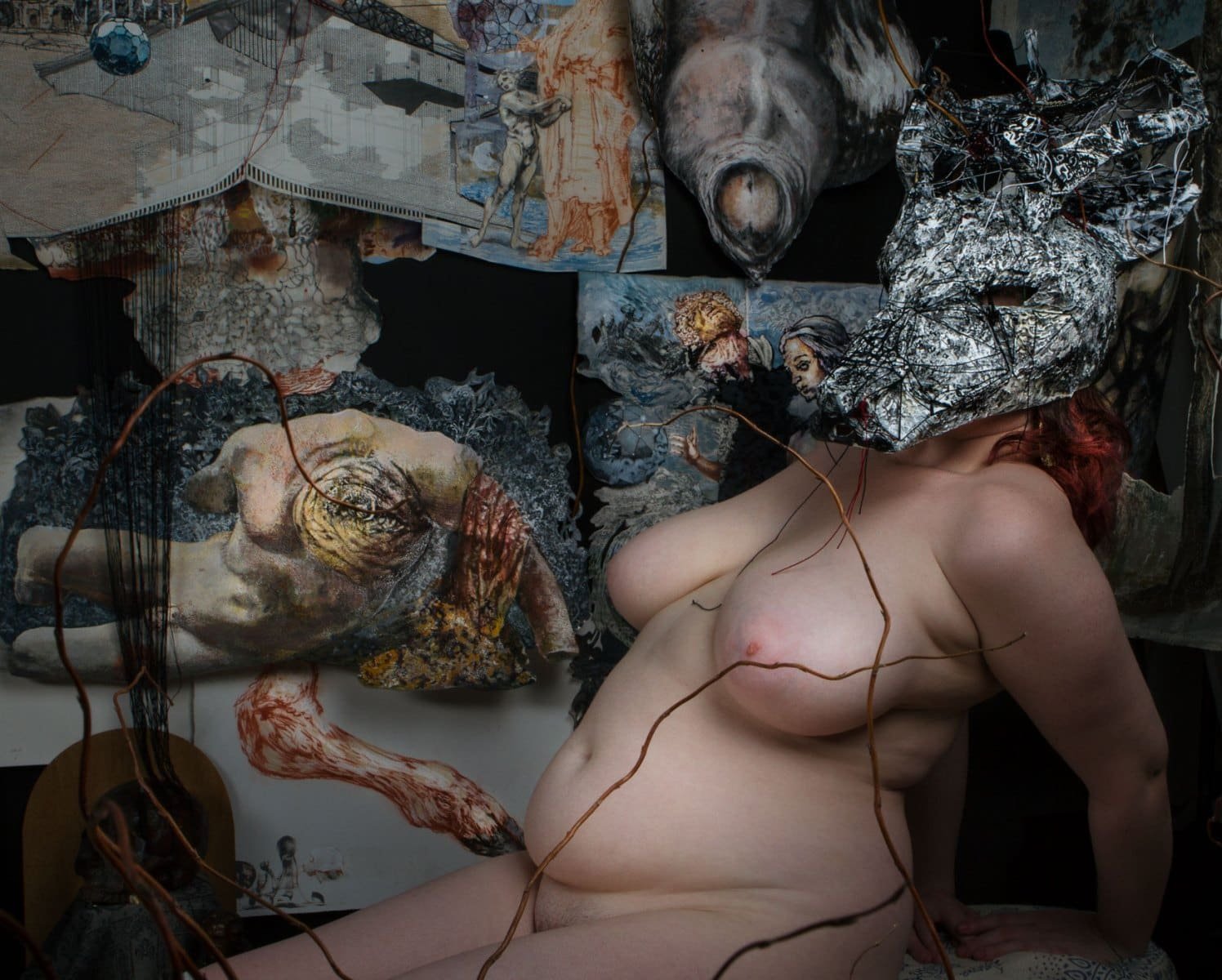
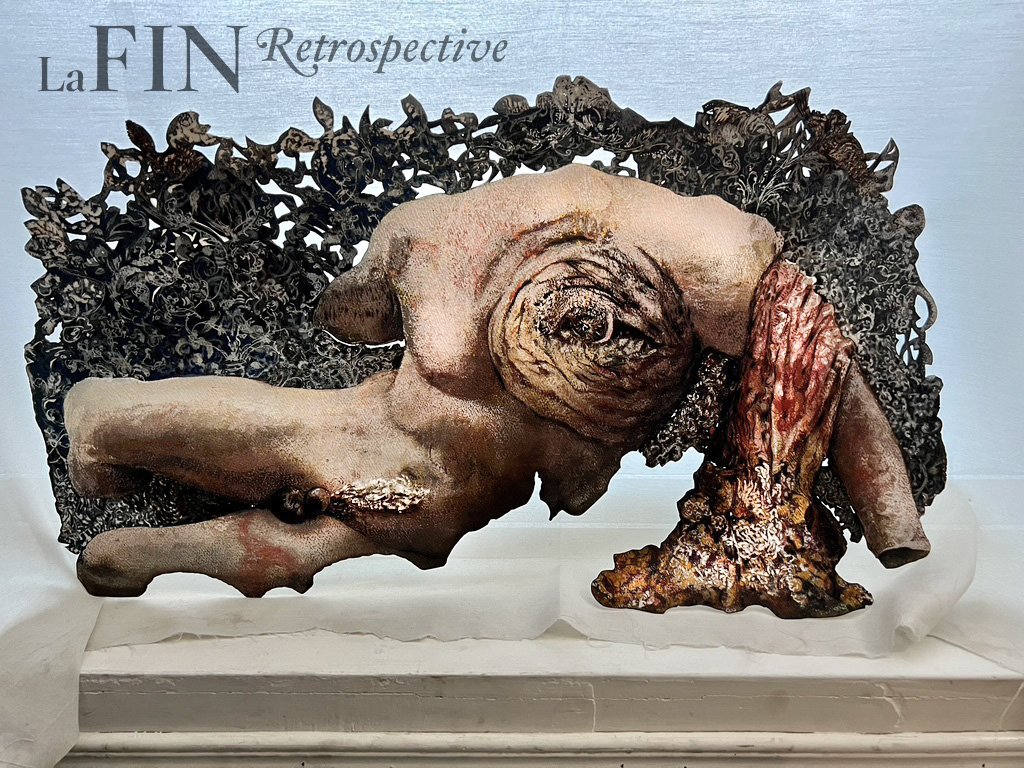
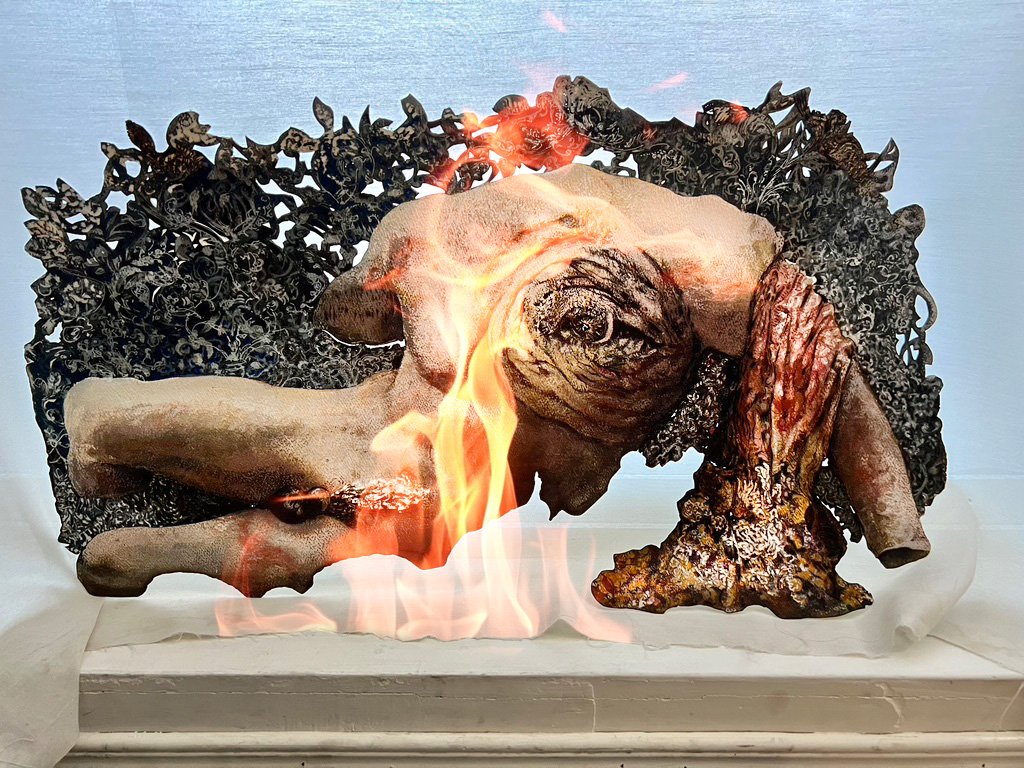
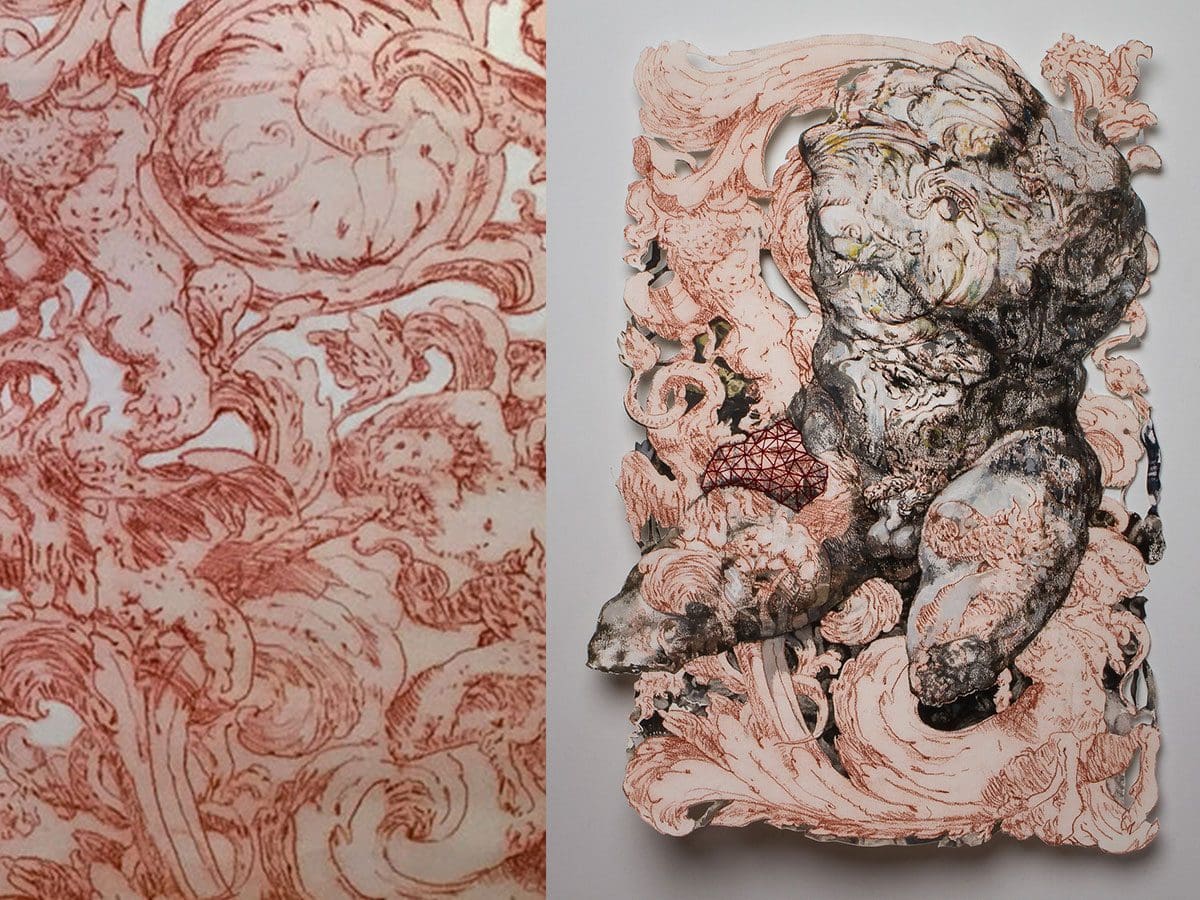
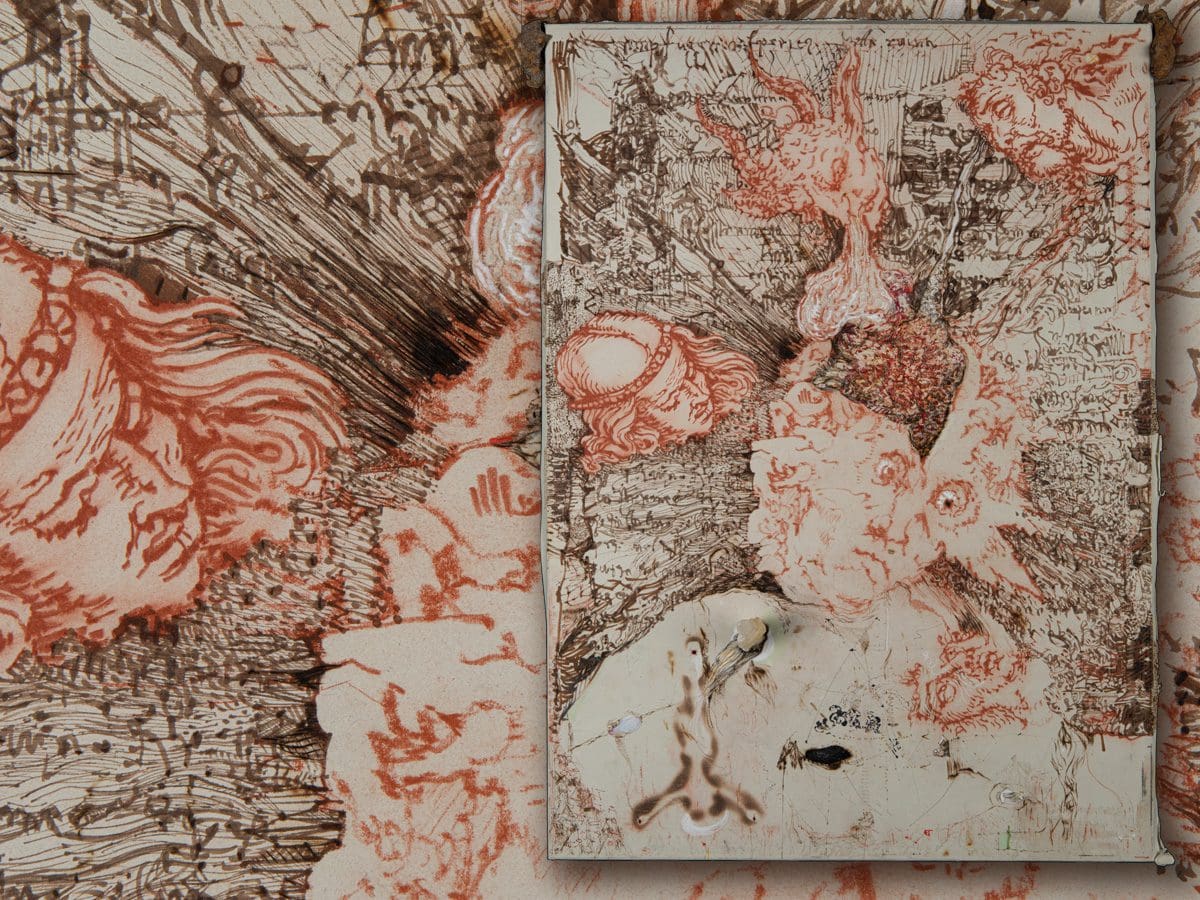
The Elephant Man is a reclining figure rendered in pastel, charcoal, conté, and gouache on carved and burnt watercolour paper. The reference derives from Figure A of the west pediment of the Parthenon. The classical sculpture already exists as a ruin, its head and arms lost to centuries of erosion. A figure caught mid-rising, frozen in marble, then broken by time into a headless, limbless torso. Dlouhy takes that ruin as a starting point and carries the damage further. The body sprawls horizontally, limbs truncated and swollen. The paper itself has been cut and burned to follow the body’s silhouette, leaving irregular, charred edges where the image meets the void.
The central mass of the torso collapses inward around an enormous spiralling eye or wound, concentric rings of flesh pulling the viewer’s gaze into a vortex. The skin is mottled, bruised, swollen with time and revision. Pale flesh gives way to ochre and rust at the extremities, where the body appears to calcify, becoming geological. The right hand, reddened and claw-like, grips at drapery or at its own disintegration. An intricate filigree of blue-silver ornament spreads across the upper ground, baroque and delicate, pressing against the grotesque weight of the body like lace laid over a carcass.
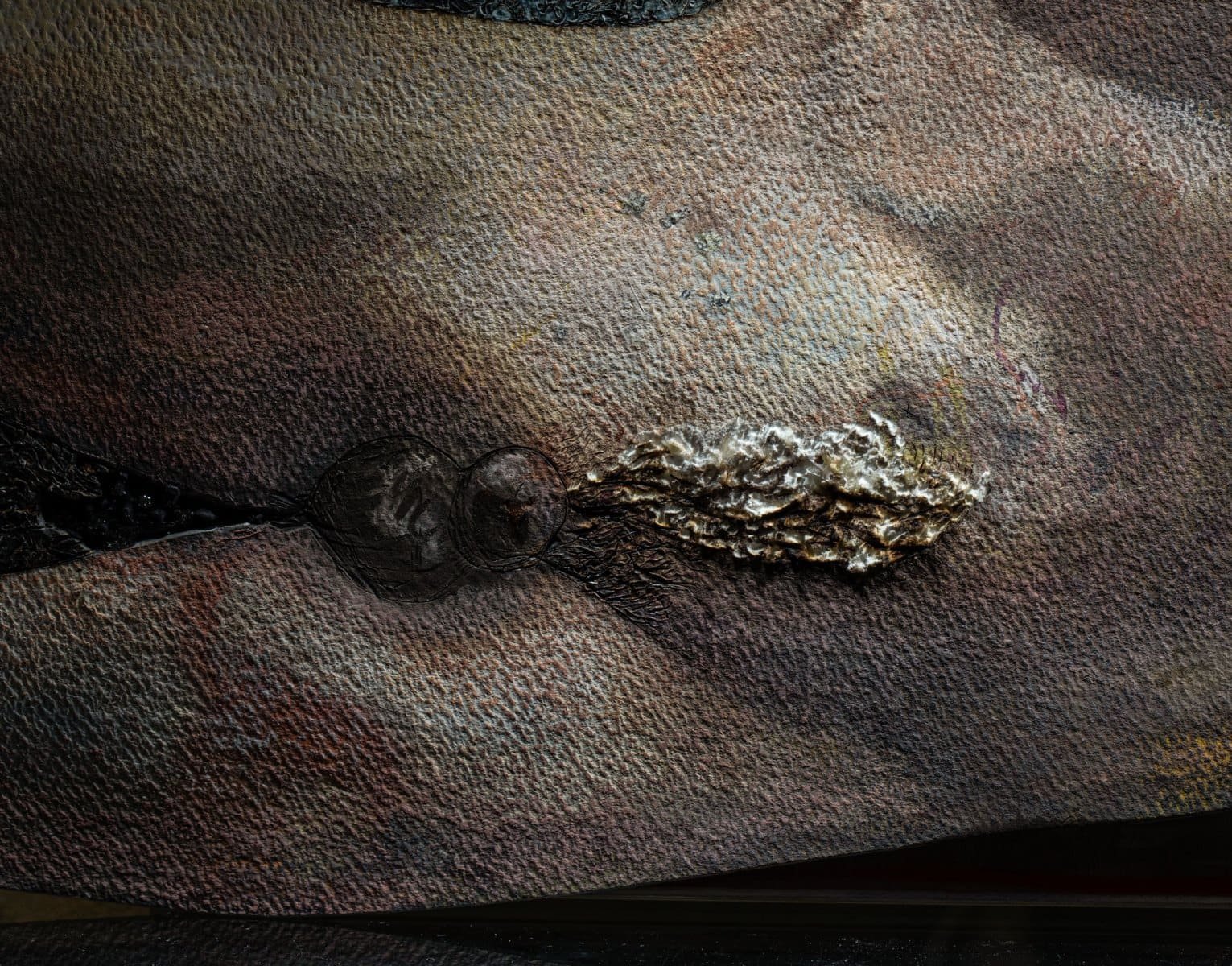
A white cloud of matter rises from the figure’s penis. The organ itself is bruised, scorched, damaged like the rest of the flesh. The emission reads as involuntary, something the body produces in extremis. Eros persists in a broken vessel. Seed, breath, spirit, smoke: the cloud sits ambiguously between all of them. In alchemical imagery, the emission of white substance from a wounded body signals the [[Albedo]], the purification that follows the blackening. The sexual and the sacred overlap here without apology. Creation pours out of a body that appears to be dying. The life force survives the destruction of the form that carries it.
The title invokes Joseph Merrick, the historical figure whose body became spectacle and whose humanity had to be excavated from beneath deformity. Dlouhy’s Elephant Man carries the same tension. The figure is simultaneously repulsive and tender, monumental and collapsing. It asks to be looked at and resists the act of looking. The carved paper removes the safety of the rectangular frame. The work exists as a fragment, a relic pulled from some larger field of damage. Like the Parthenon fragment, the body is exposed, unguarded, surrendered to forces larger than itself.
Reference: