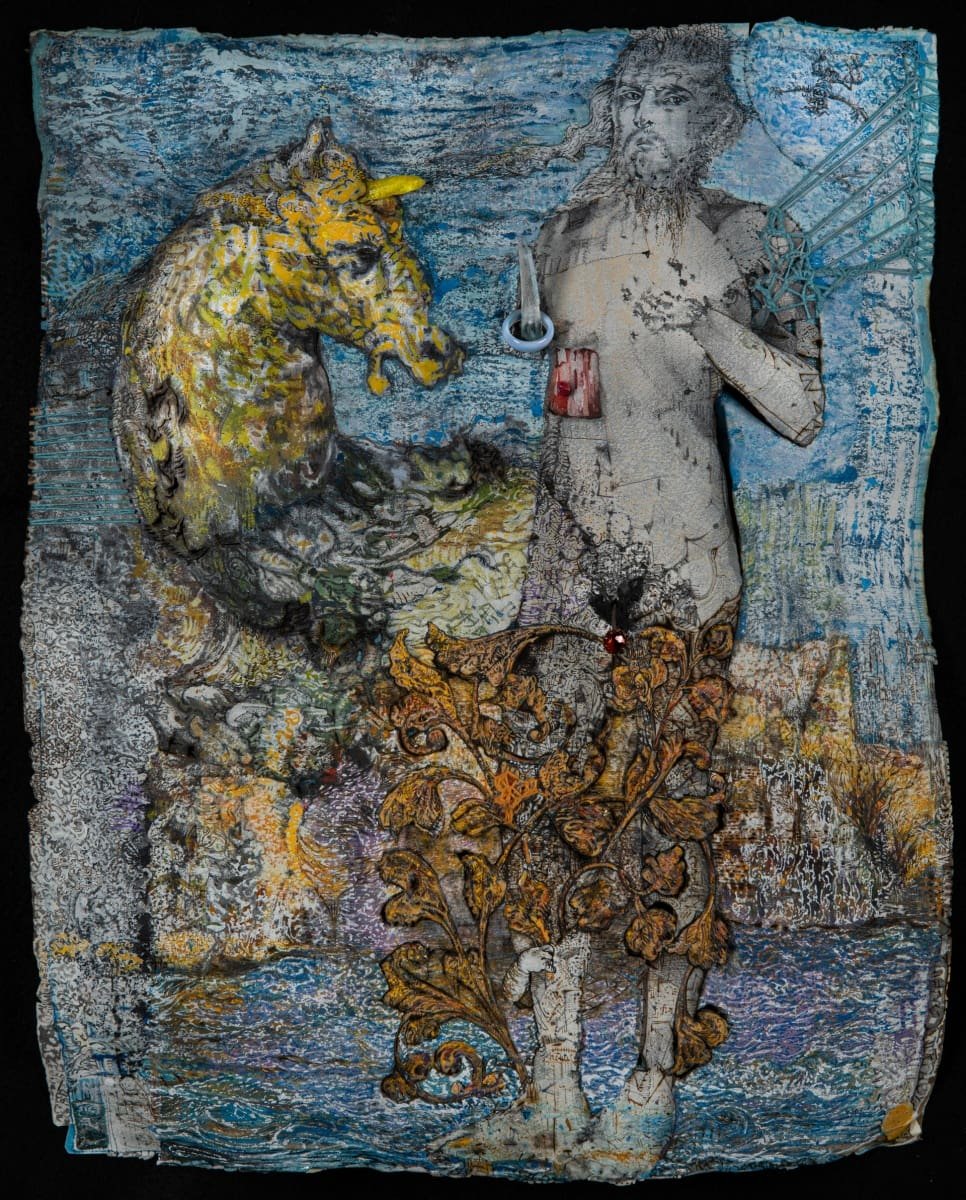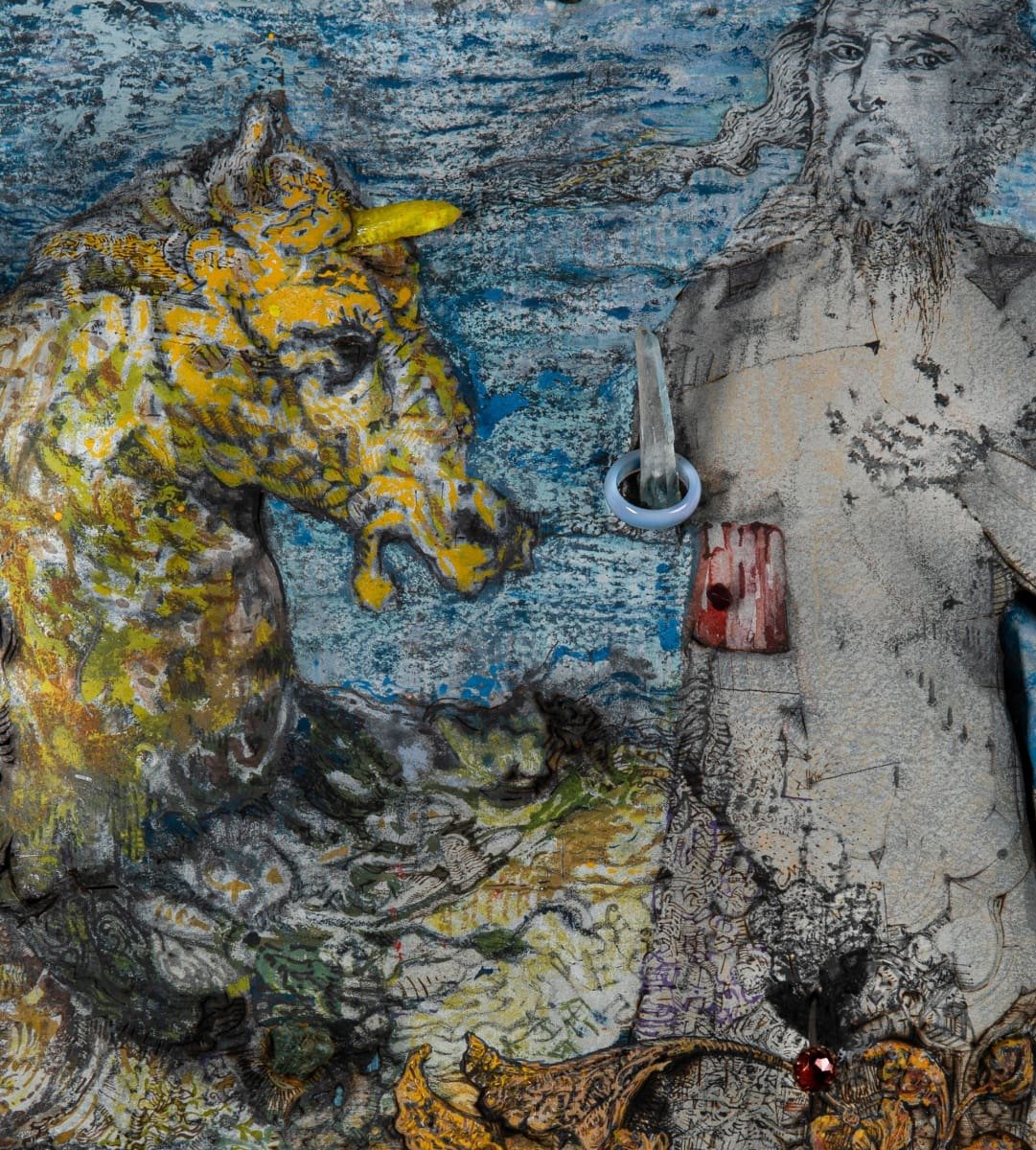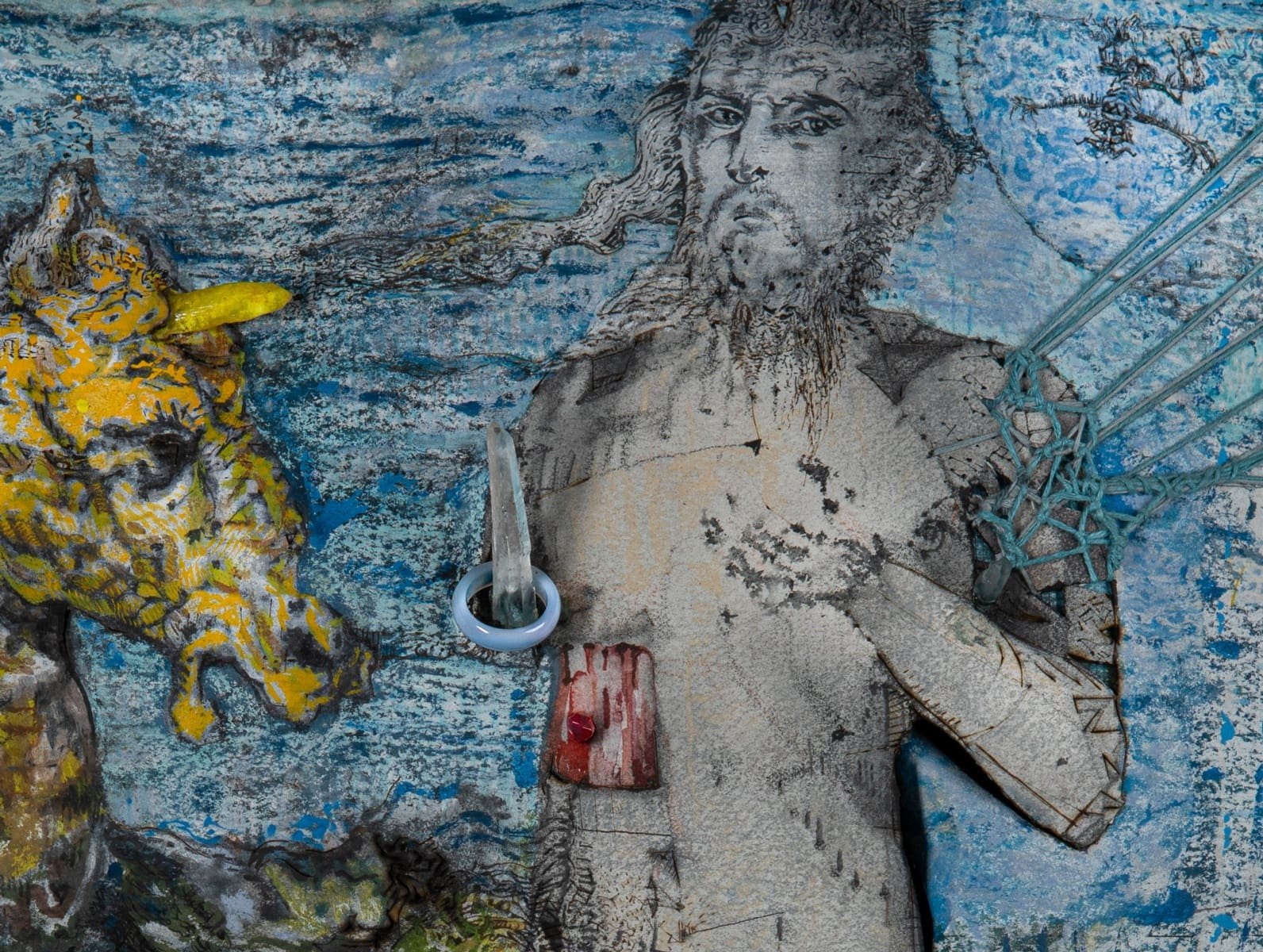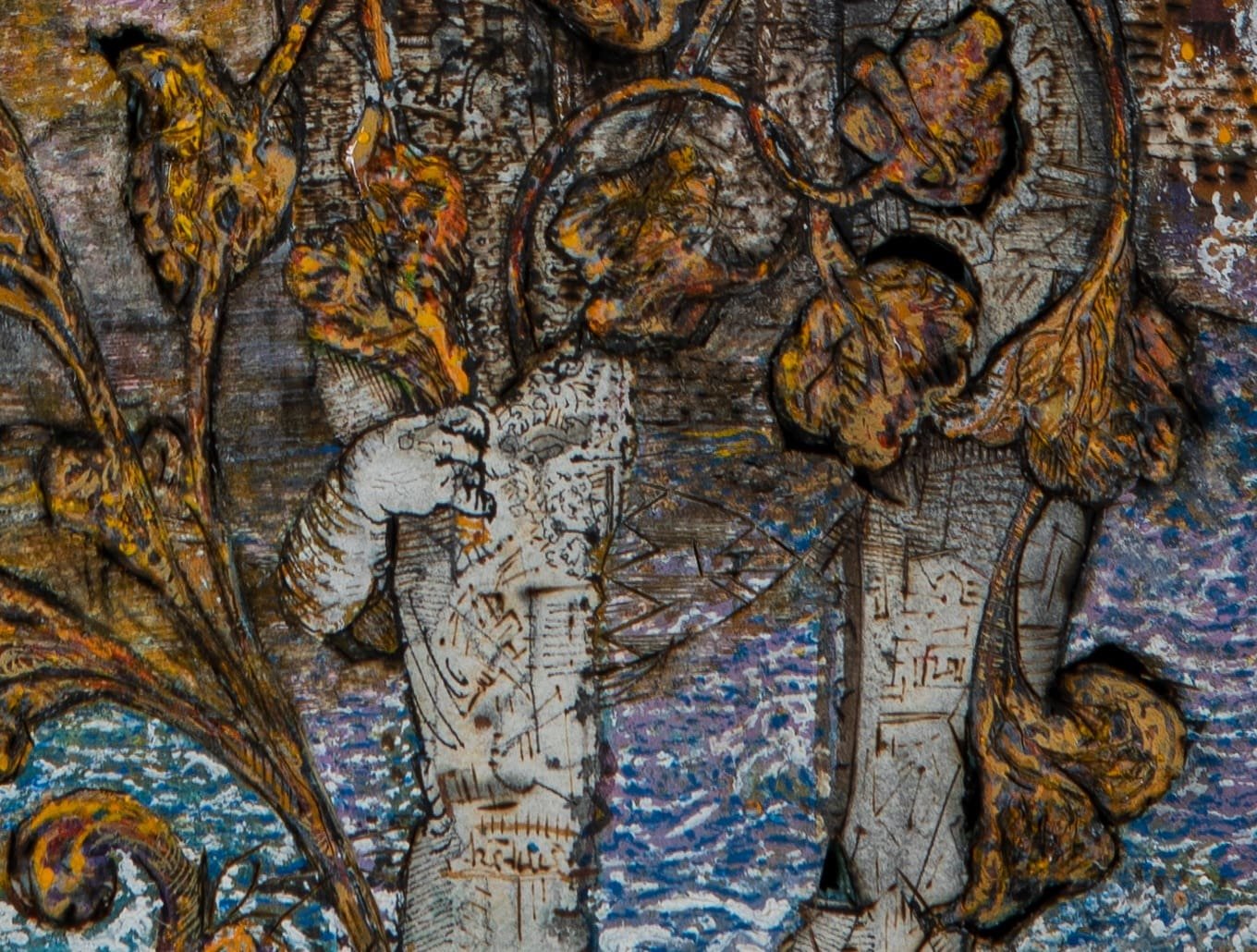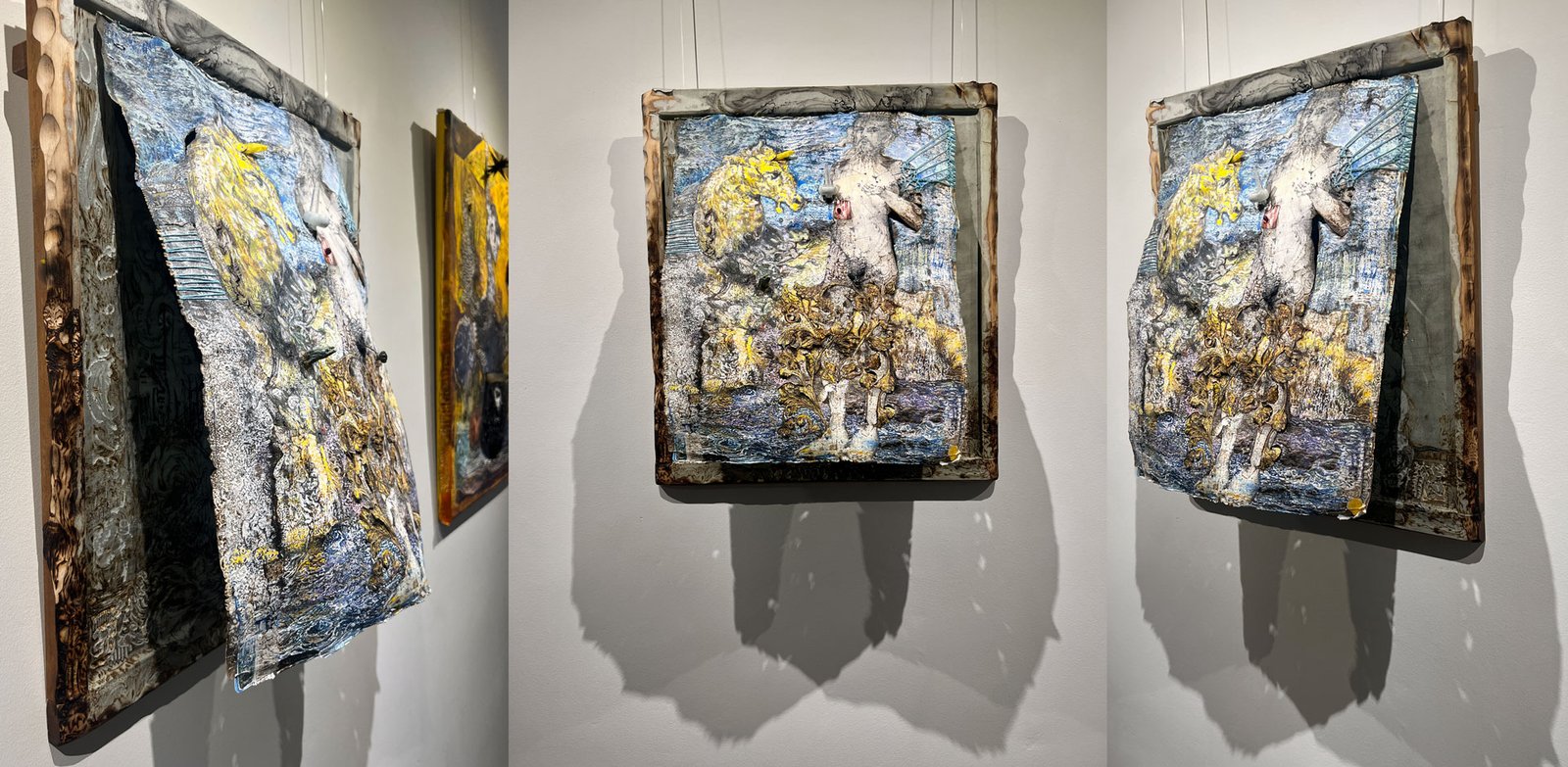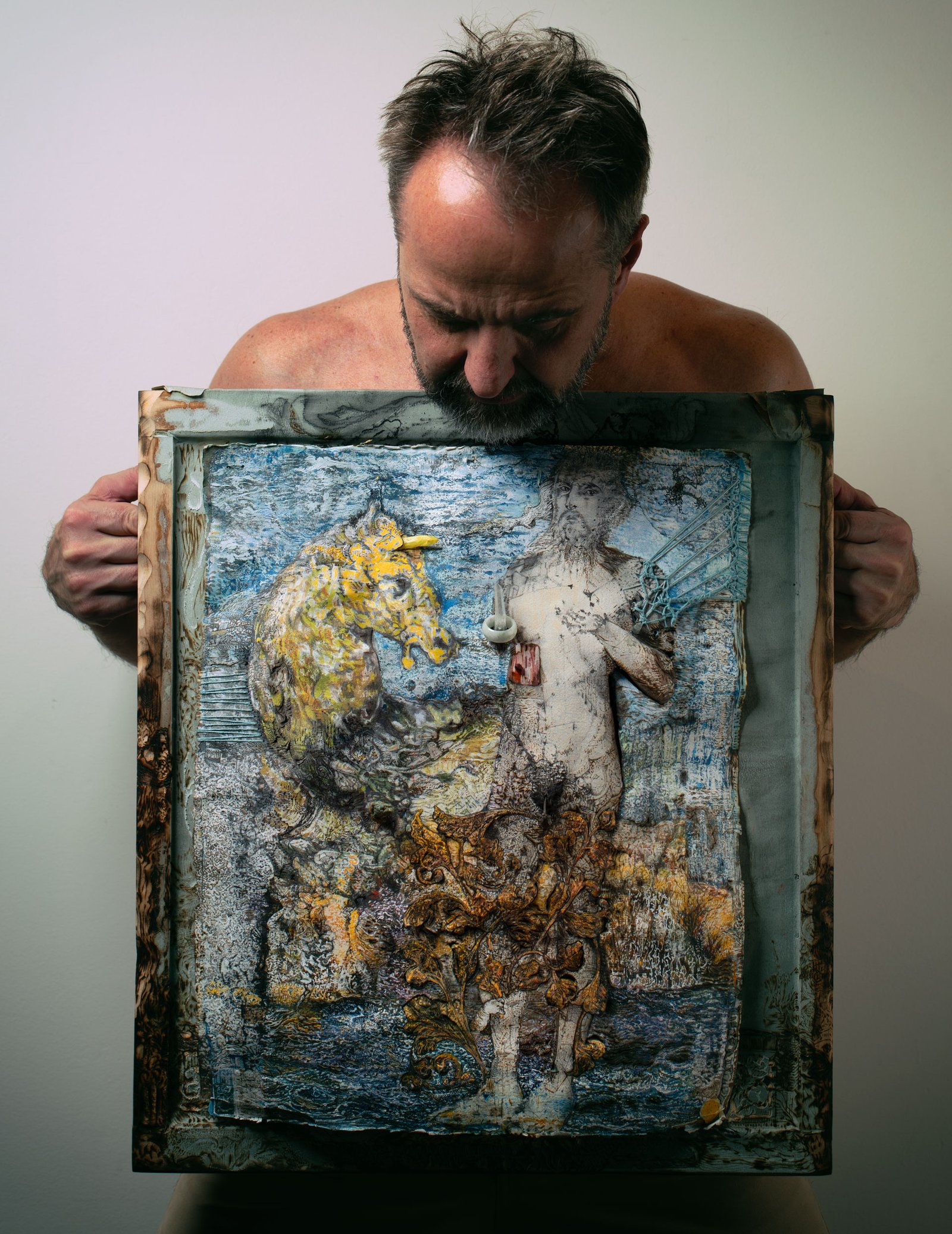
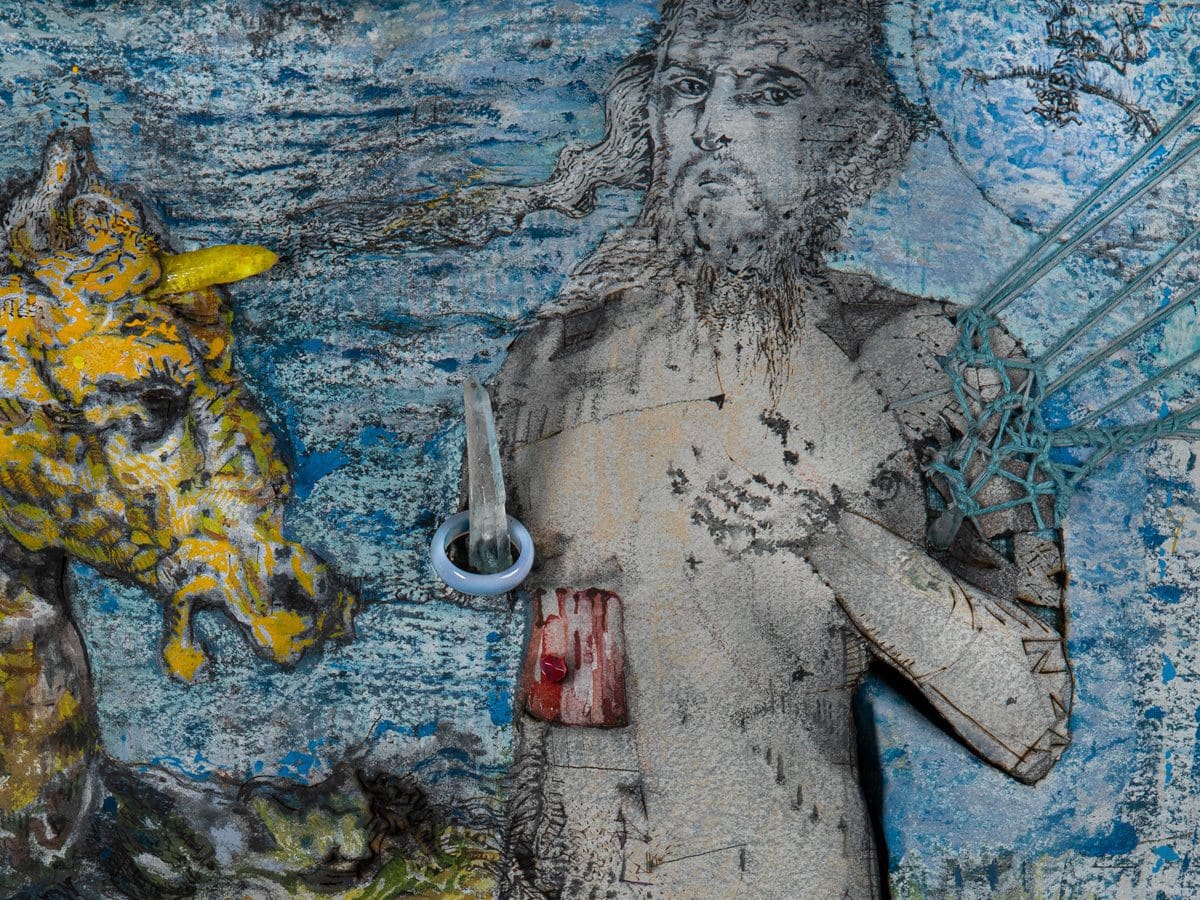
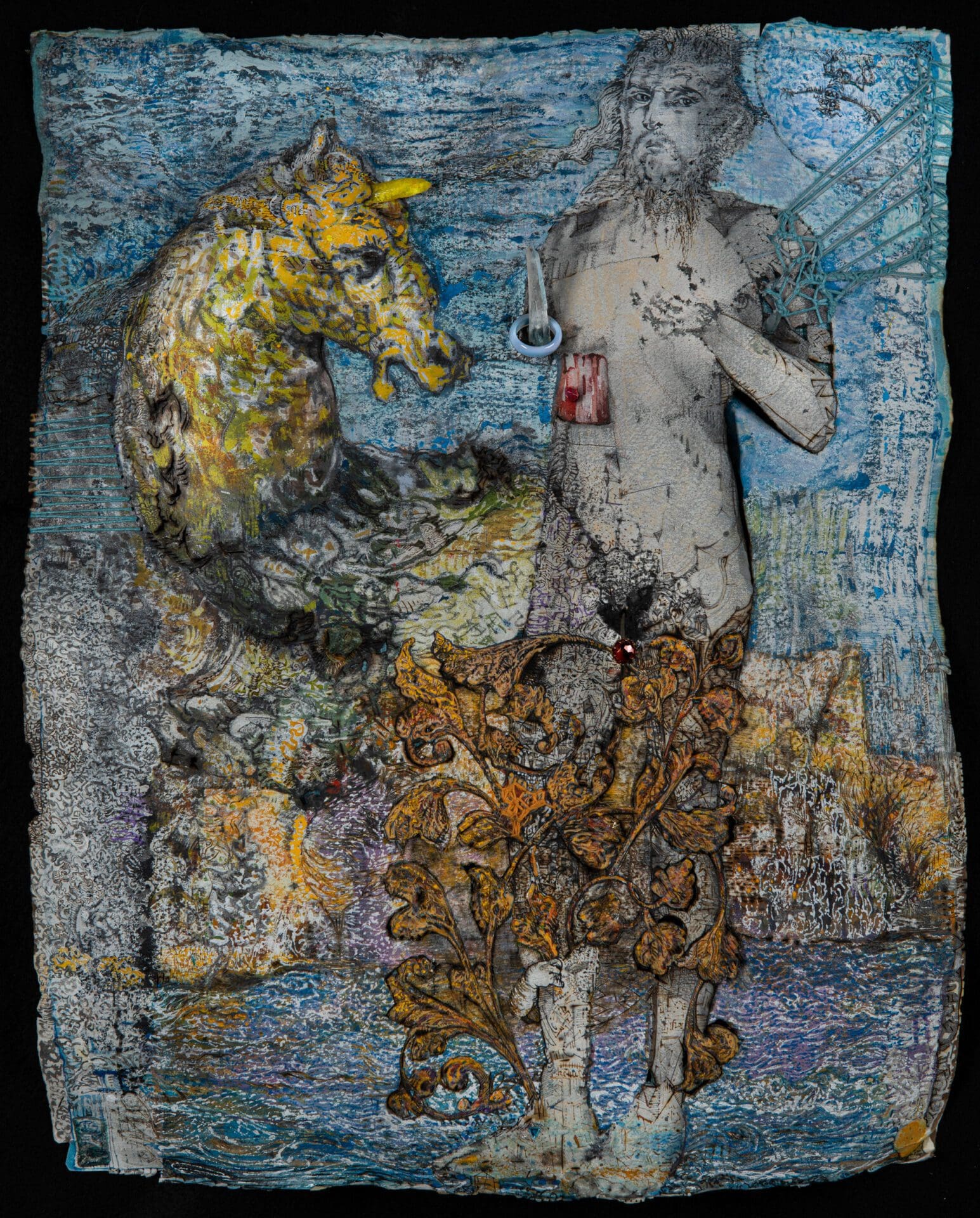
There is a man but he is almost gone. Colourless. Carved away and covered, he stands tall, too tall, calm and bewildered. There is a gate I believe to be a passage way to heaven. It is bright and in the distance. A garden perhaps. The eye of a powerful beast examines the fractured flesh. There are other symbols, but their meaning is indecipherable. Man. Child. Garden. Horse. Water. Sky. Demon.
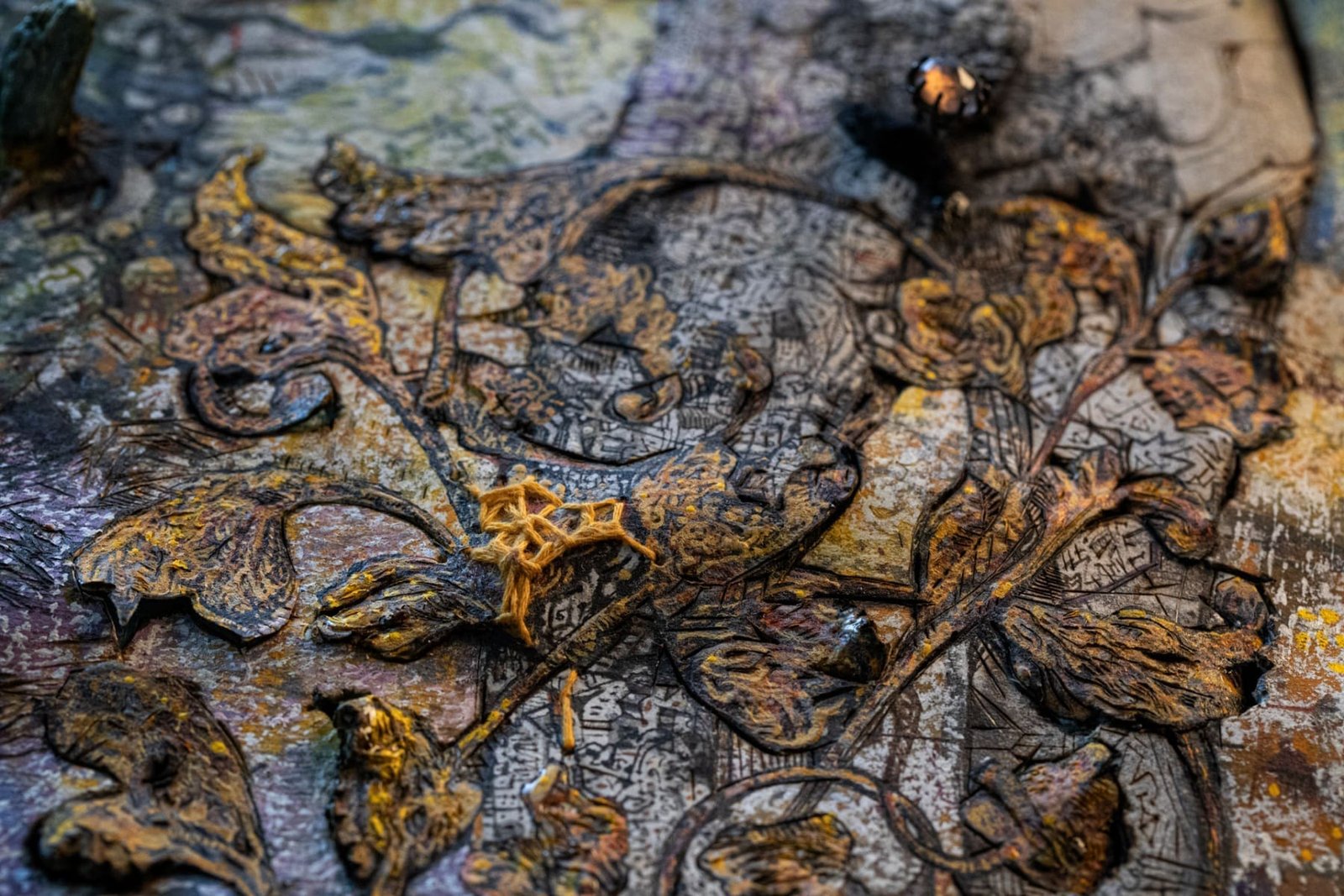
20 years in the making, the Disappearing Man is slowly turning to dust. His head and feet are vanishing off the edge. There is something growing out of his right foot. A child is hiding behind his burnt leg. His arms and hands are almost gone. His penis is a bright jewel and his scrotum is a jumbled black mess. His heart is exposed. He is wounded and tipping, pulled by strings being played by a demon. The yellow beast by his side is materializing. A mythical figure with a human expression of shock.
I feel sick looking at this work. Even in a calm moment, while drinking tea, I see it out of the corner of my eye and I feel uneasy.
Curatorial Study
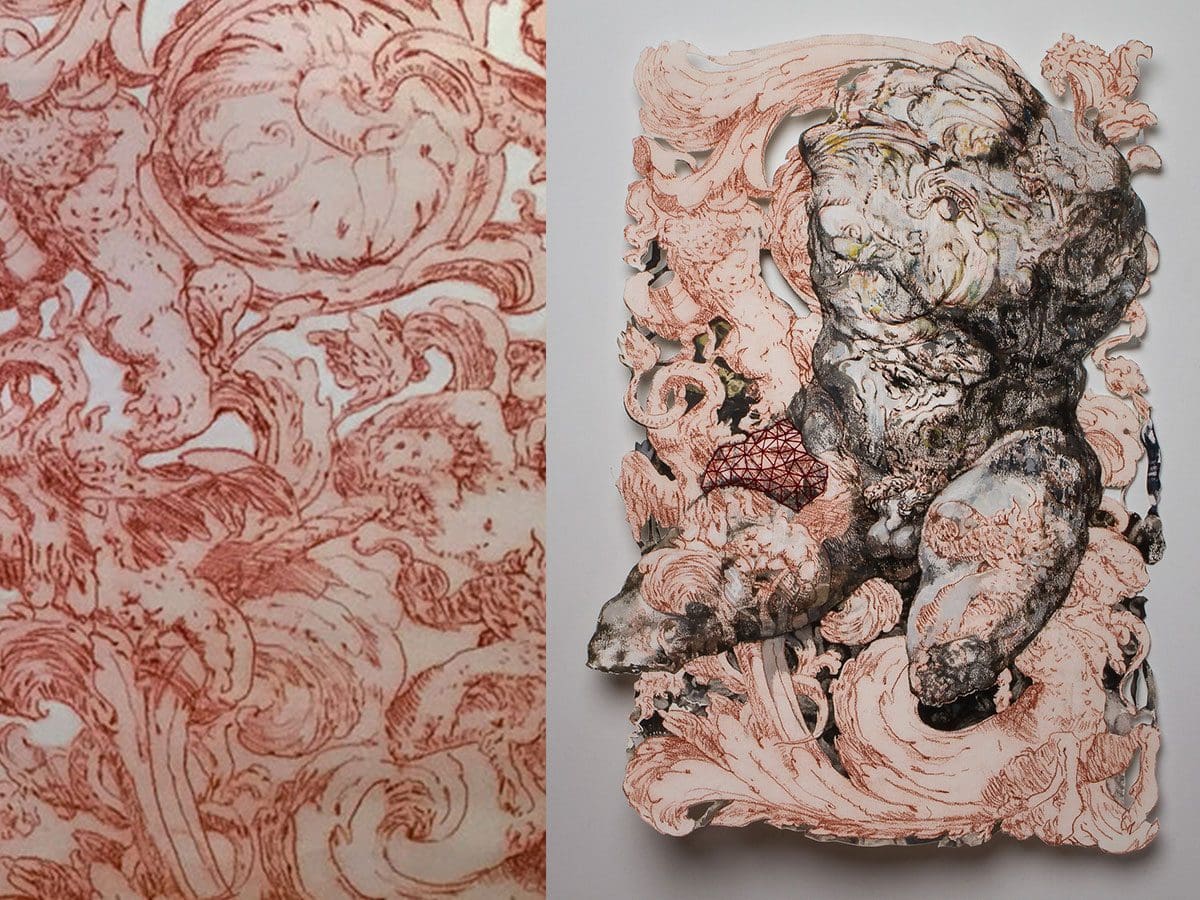
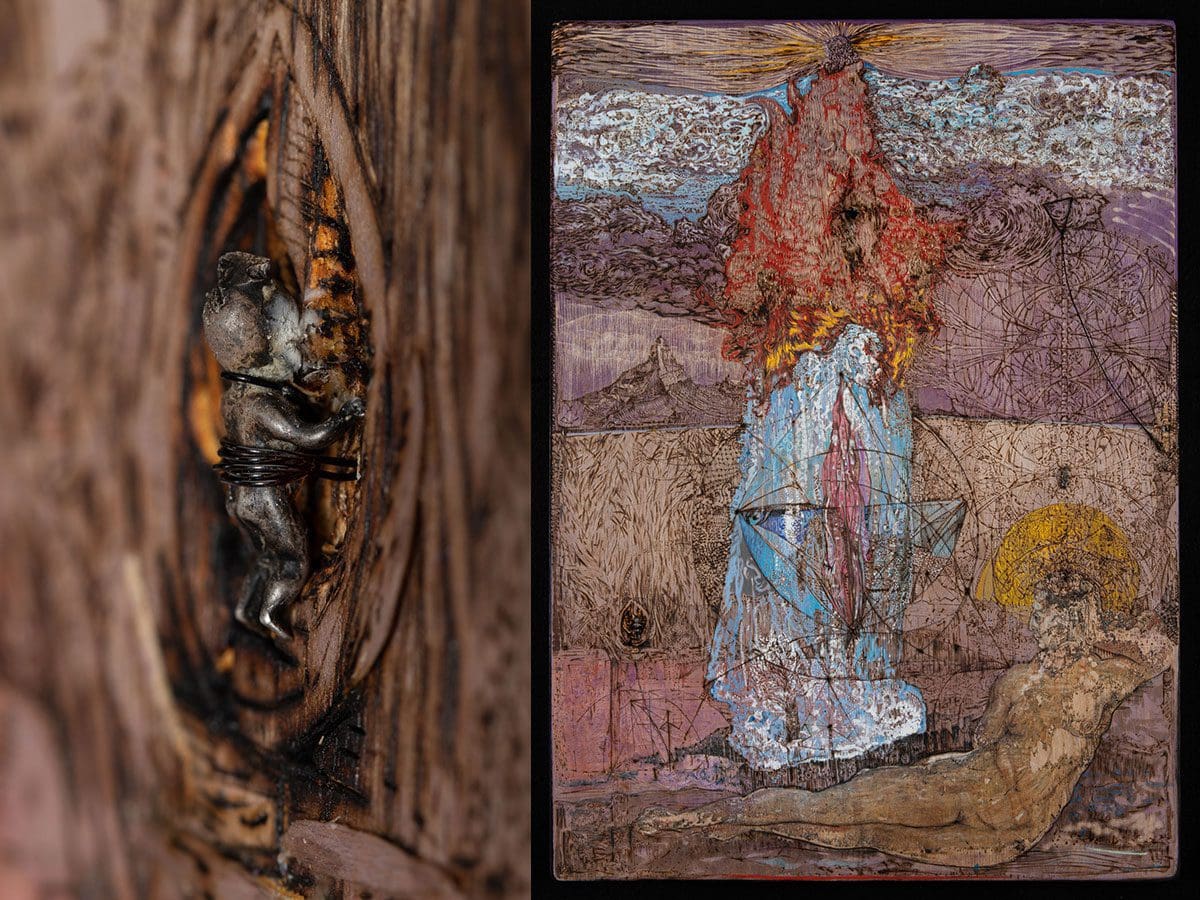
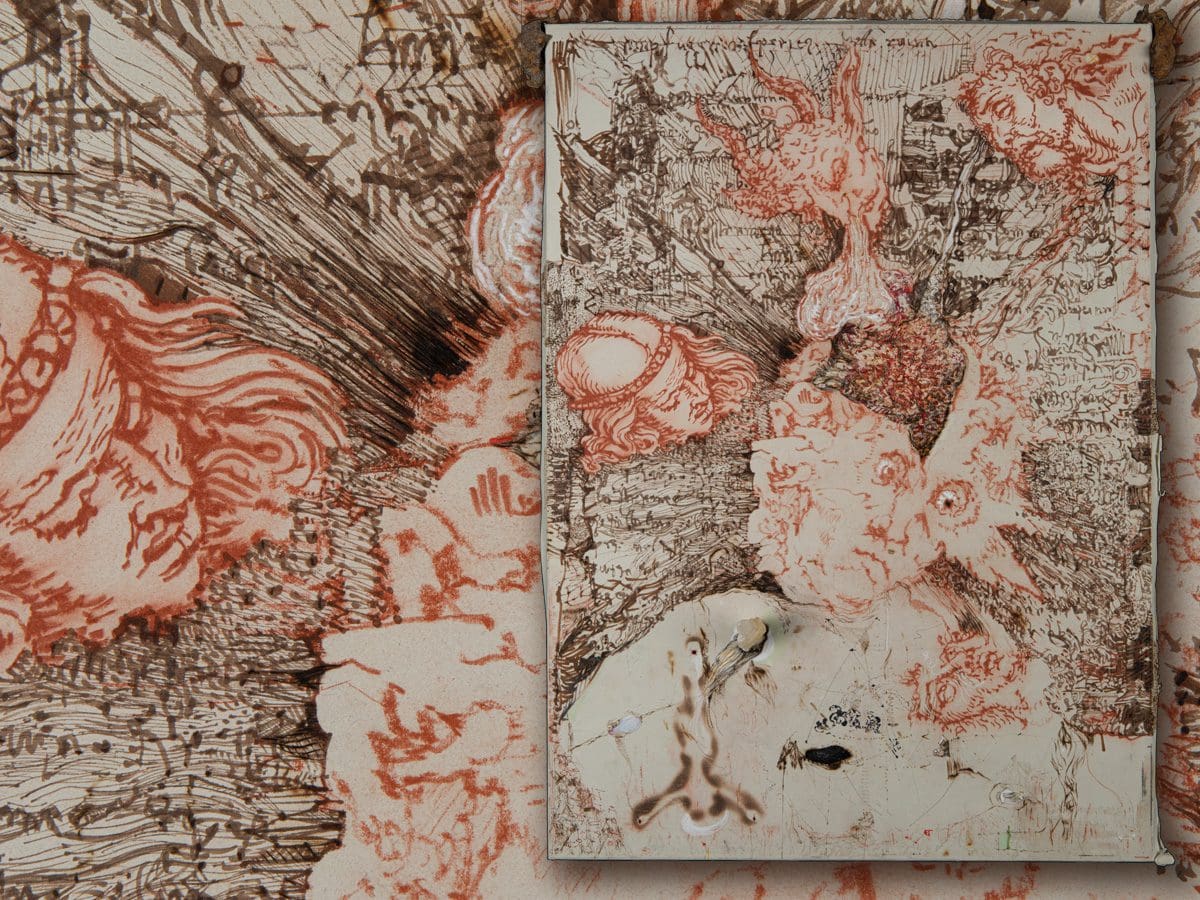
The Disappearing Man is one of the oldest evolving works in the Milostate archive. More than twenty years of sustained revision have brought it to the edge of material existence. The watercolour paper, worked and reworked until its fibres began to fail, eventually required mounting on a flexible backing to hold it together. That backing has now begun to burn and crumble as well. Beneath it, the wooden panel carries its own intricate charcoal drawing, a dense and ghostly composition that becomes progressively visible as the upper layers deteriorate. The work consumes itself. What lies beneath rises slowly to replace what is lost.
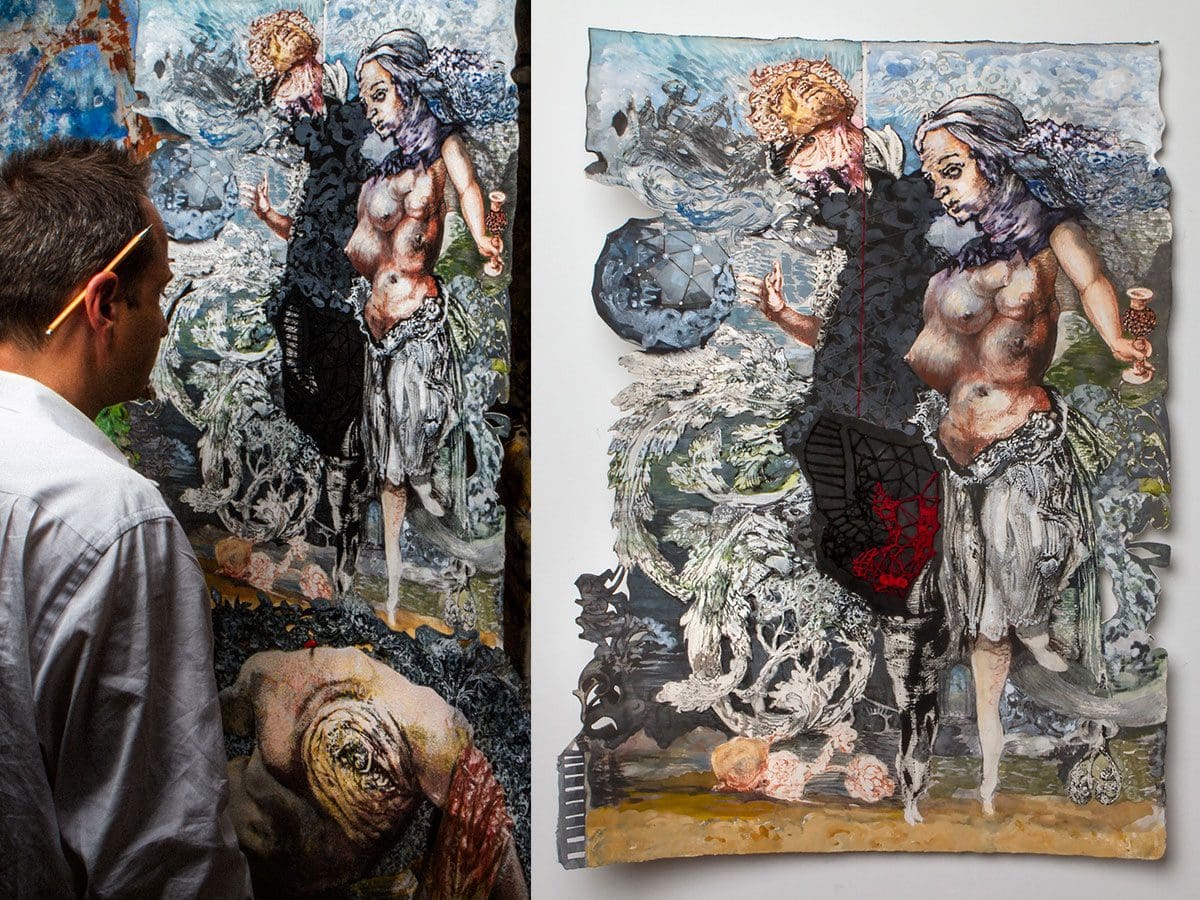
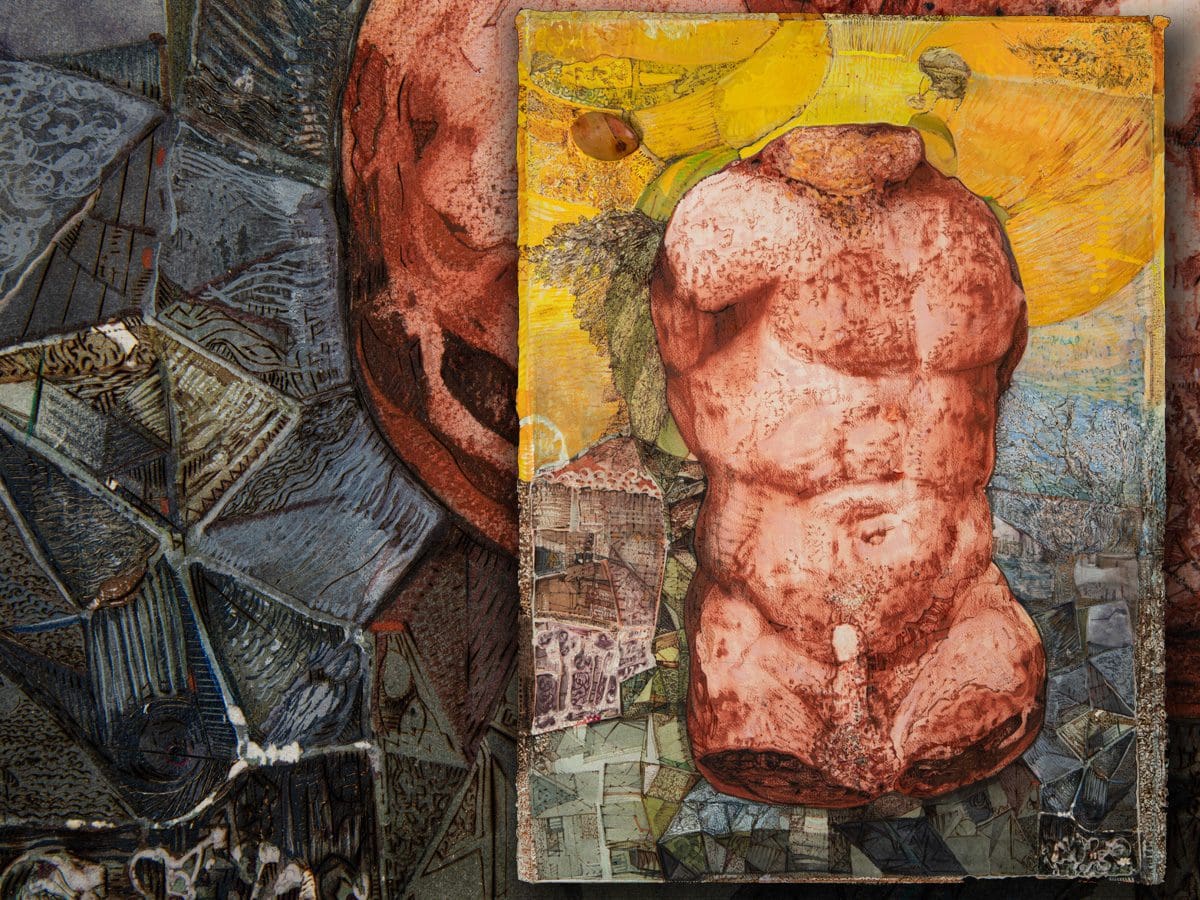
The composition presents a tall male figure standing in water and extending upward into the sky. He is disappearing. His head thins into atmosphere. His feet vanish into the surface below. His body appears carved away, colourless, interrupted, covered over. He stands too tall for the frame, calm and bewildered.
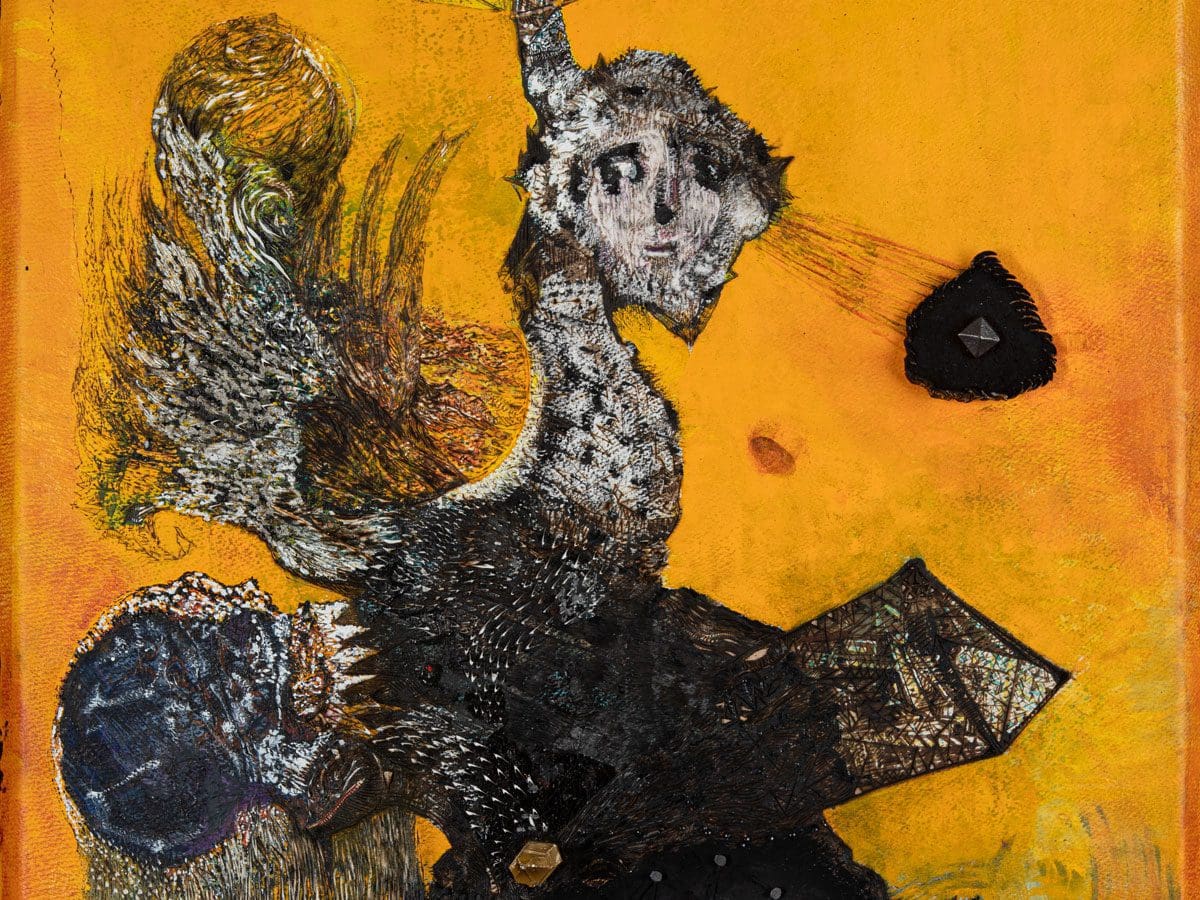
To his left, a large yellow beast materializes. It carries the body of a horse and the expression of something caught in the act of emergence. A yellow crystal is embedded in its head. The animal is dense with colour and texture where the man is pale and eroding. They appear in different states of being. The beast gathers force. The man dissolves.
One of the man’s arms is gone. In its place, a crystal juts from the elbow, encircled by a blue ring. Flesh gives way to mineral. The body compensates for its own disappearance by producing something harder, something geological, something that may outlast the tissue that once carried it. This motif recurs elsewhere in Milo’s work, where the human figure does not simply vanish but passes into stone, earth, relic, and residue.
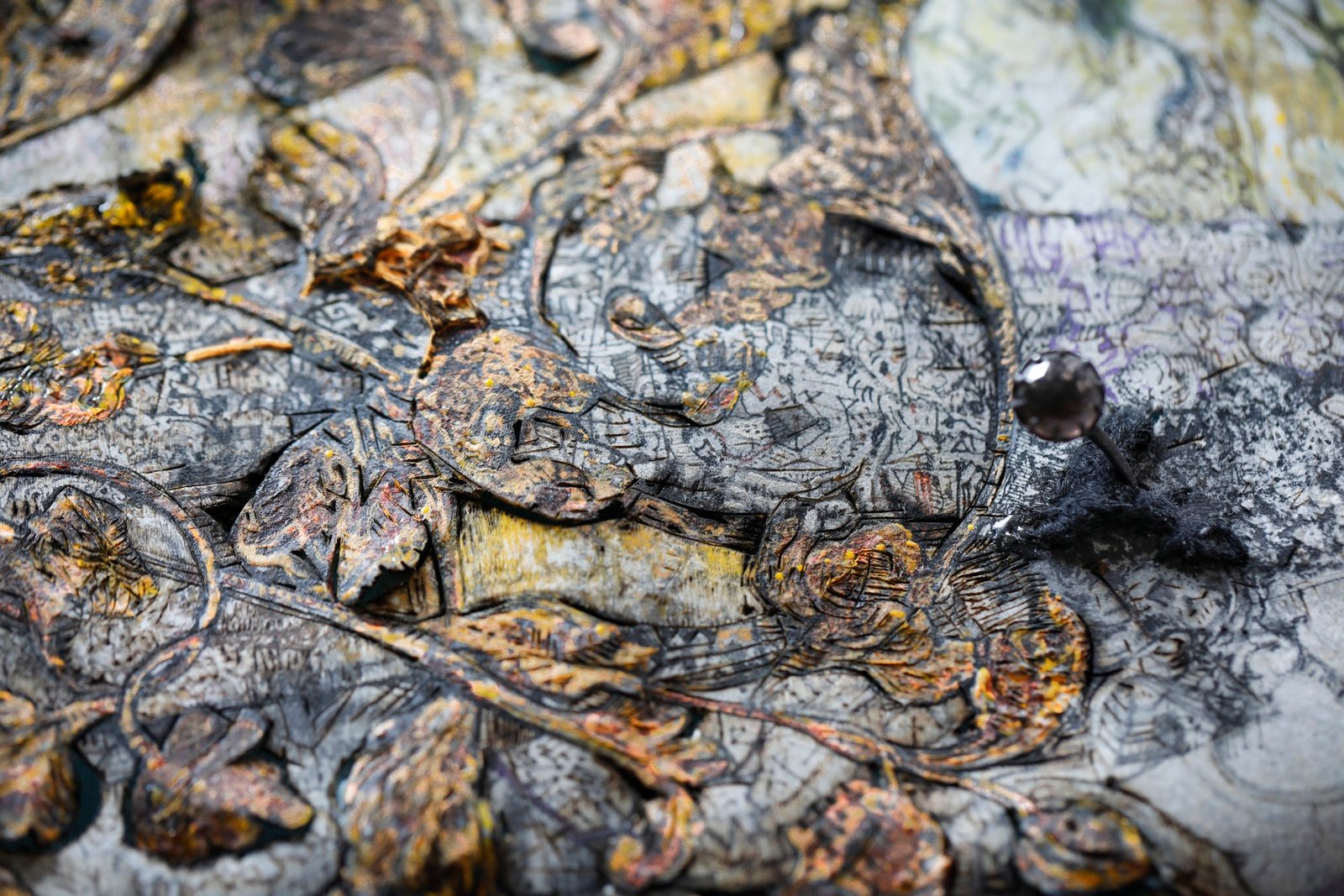
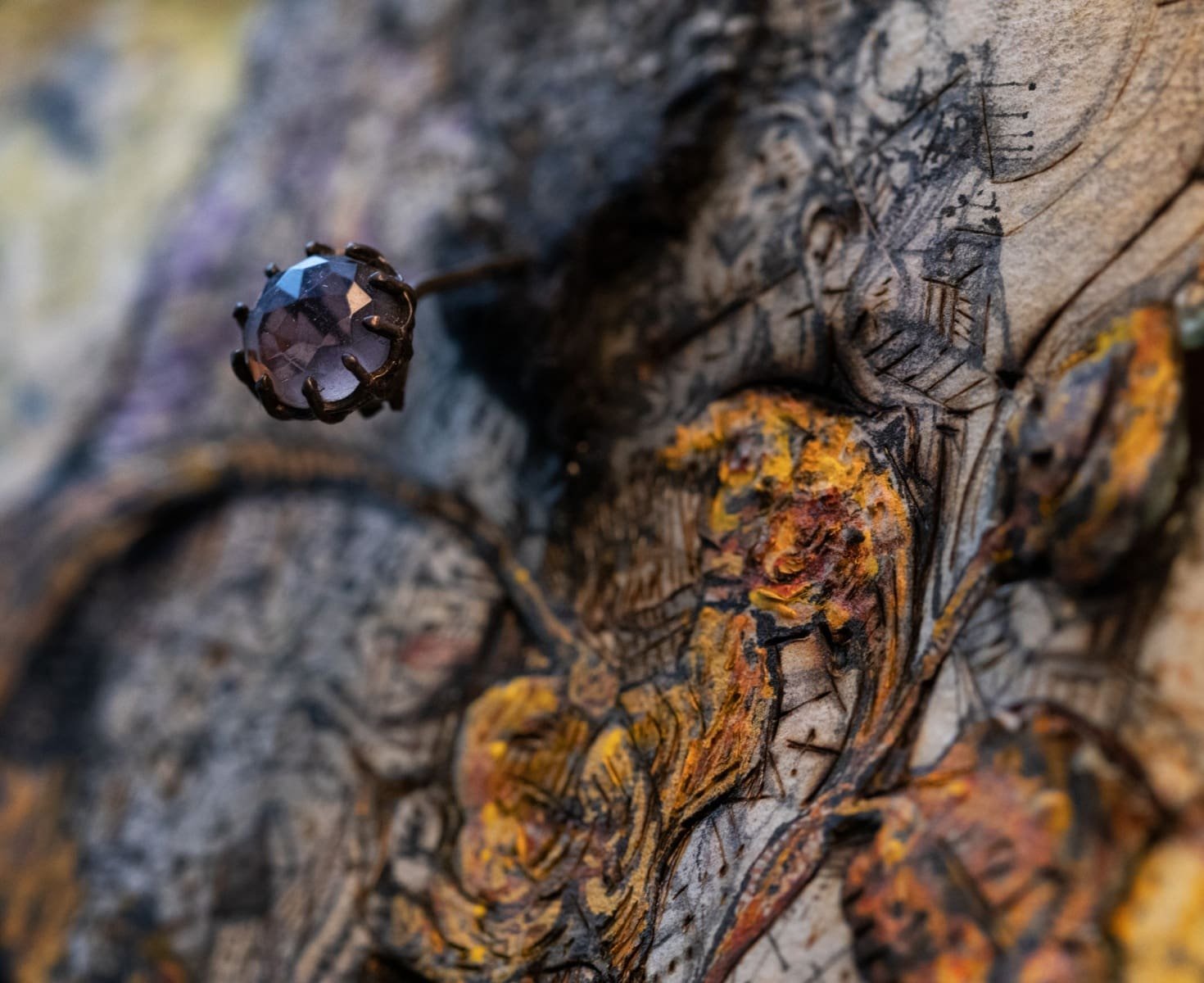
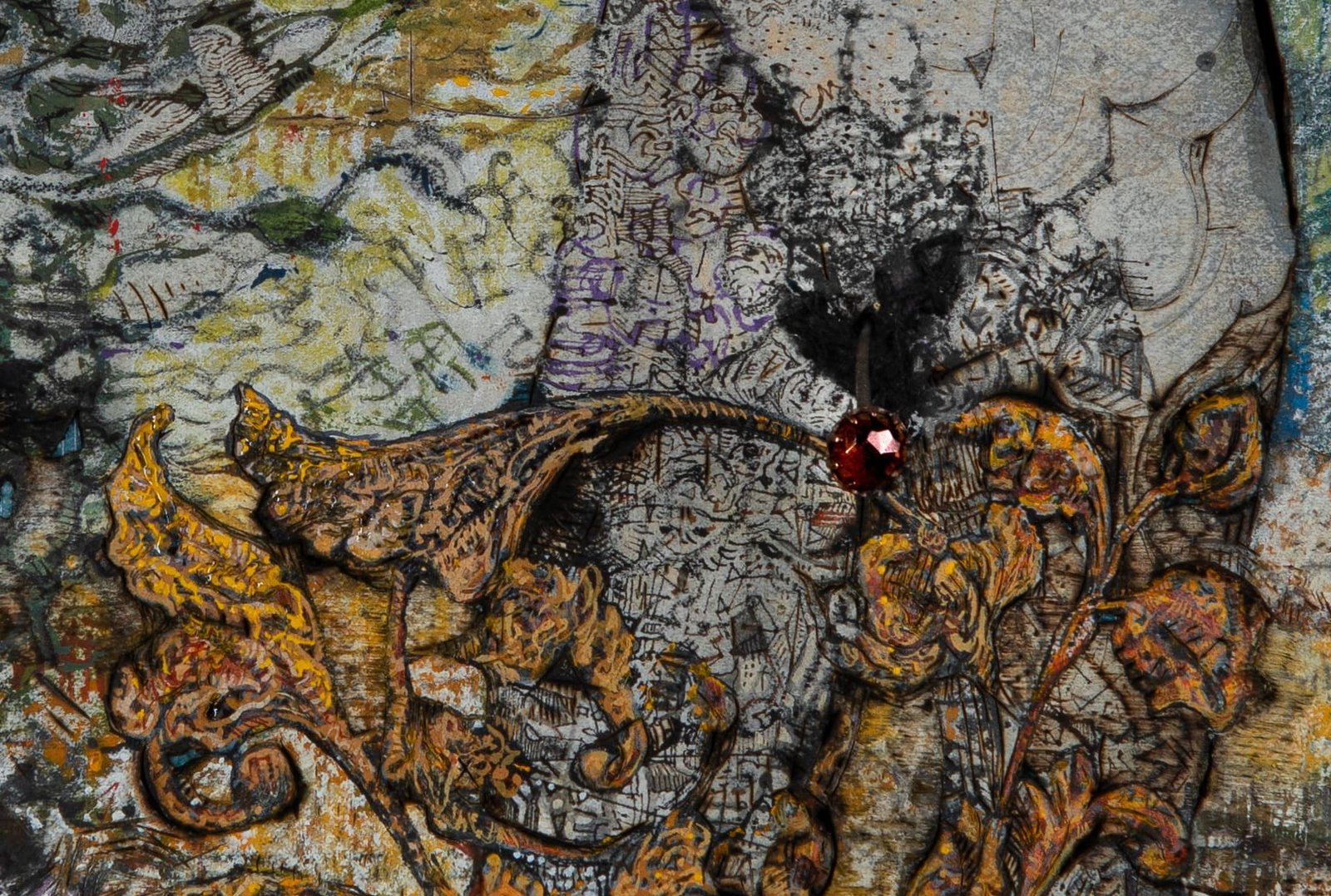
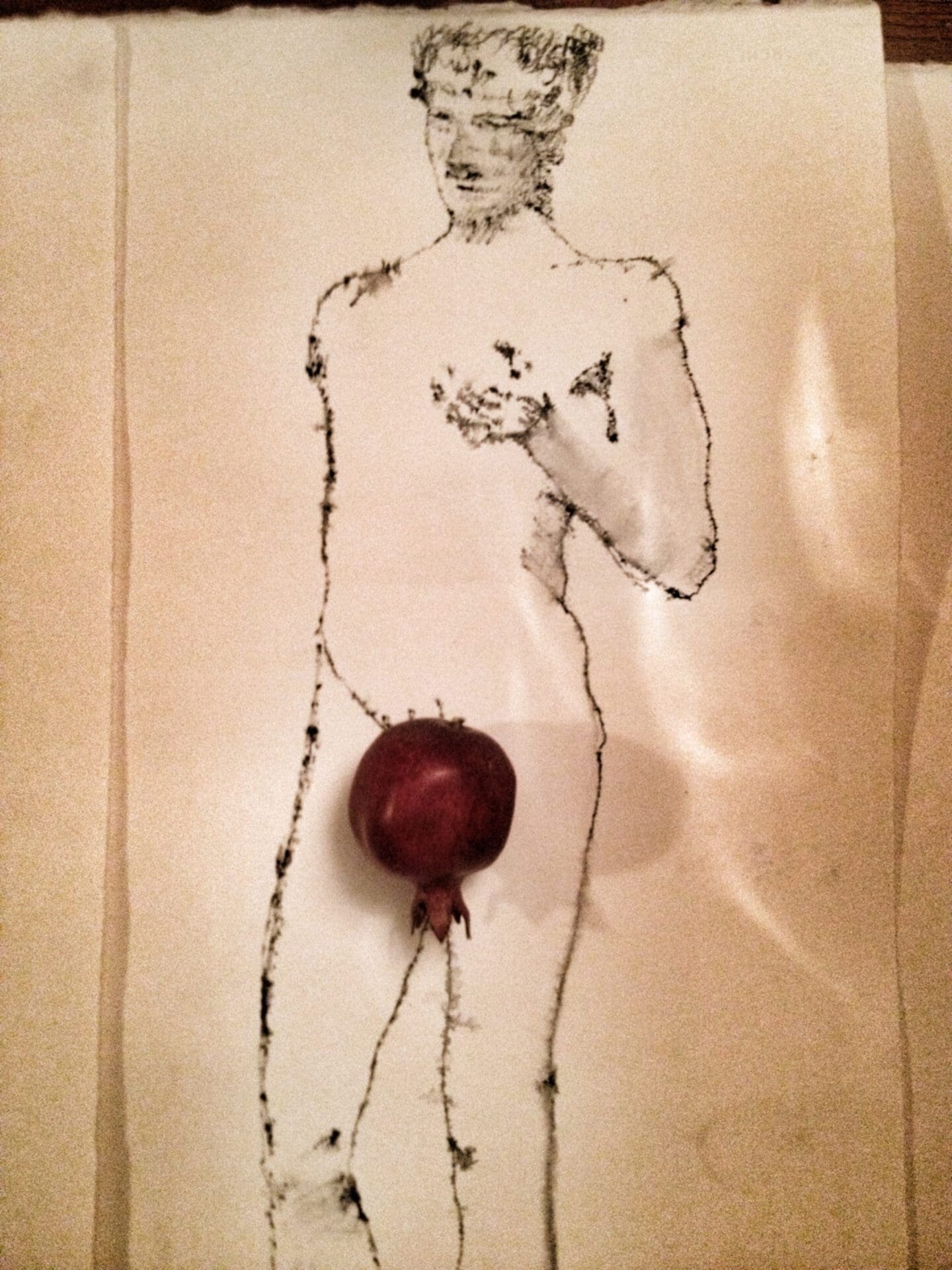
At the genital centre, black thread emerges from the surface and holds a red jewel. Even here, in a body that is barely present, erotic charge persists. The jewel concentrates that energy into a single point of blood-coloured intensity. It reads as wound, offering, and remnant all at once.
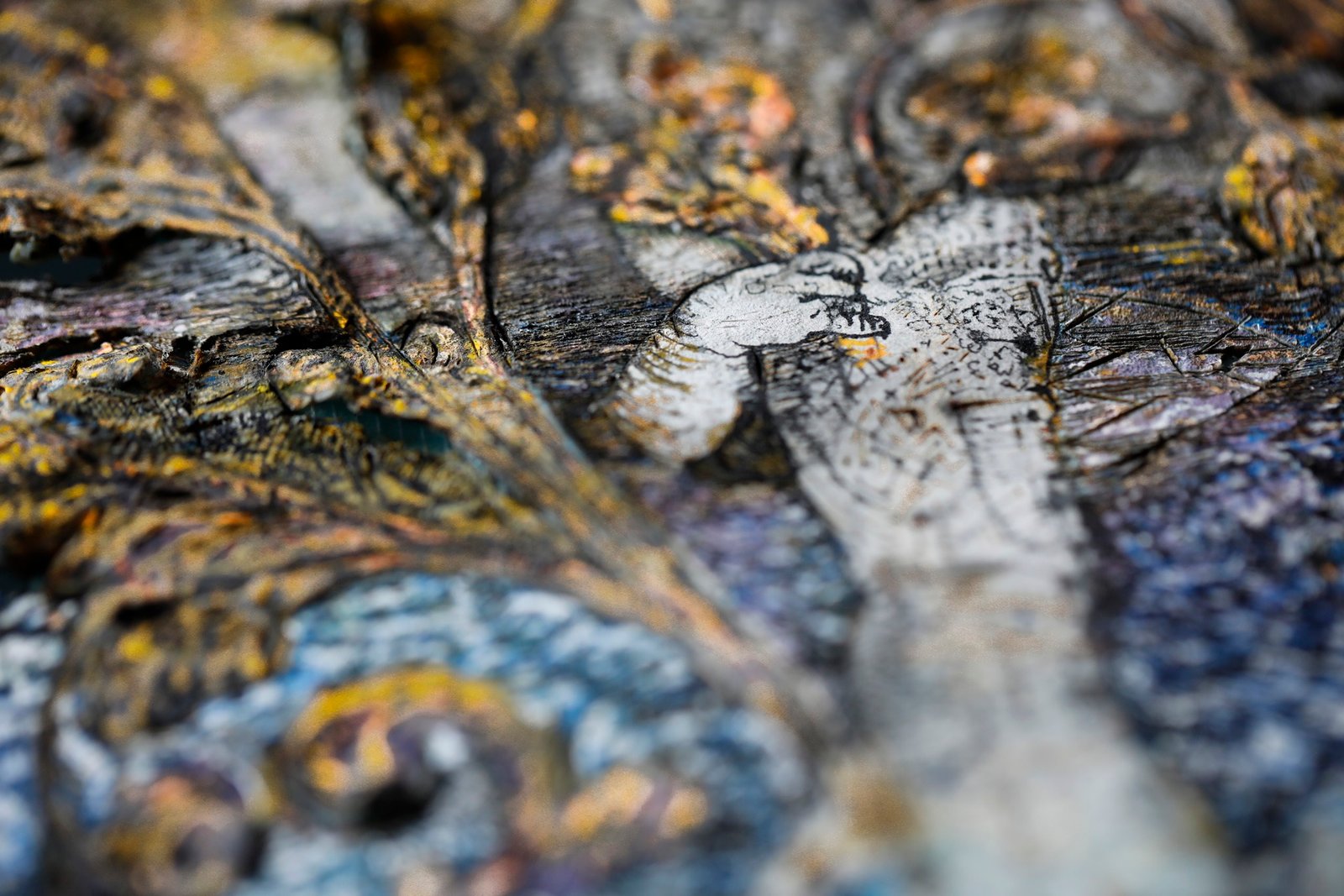
Above, more thread stretches through the sky. A small devil descends along it, tugging at the figure from above. The man is not merely fading. He is being acted upon. The puppet motif introduces fate, psychic pressure, and unseen agency. Behind the man’s legs, a child’s hand reaches out and grips the foliage. The body of the child remains hidden. Only the act of holding is visible. The detail carries unusual force. Something small and concealed still clings to life as the larger figure gives way.
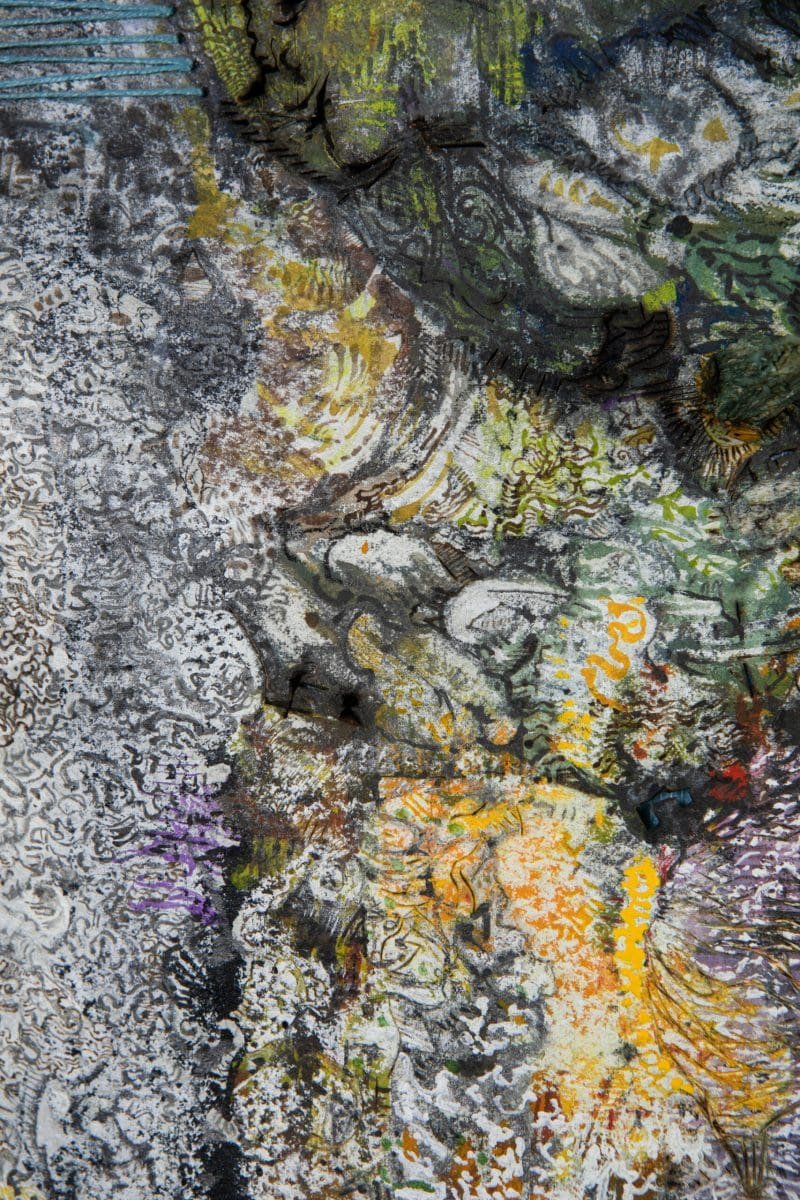
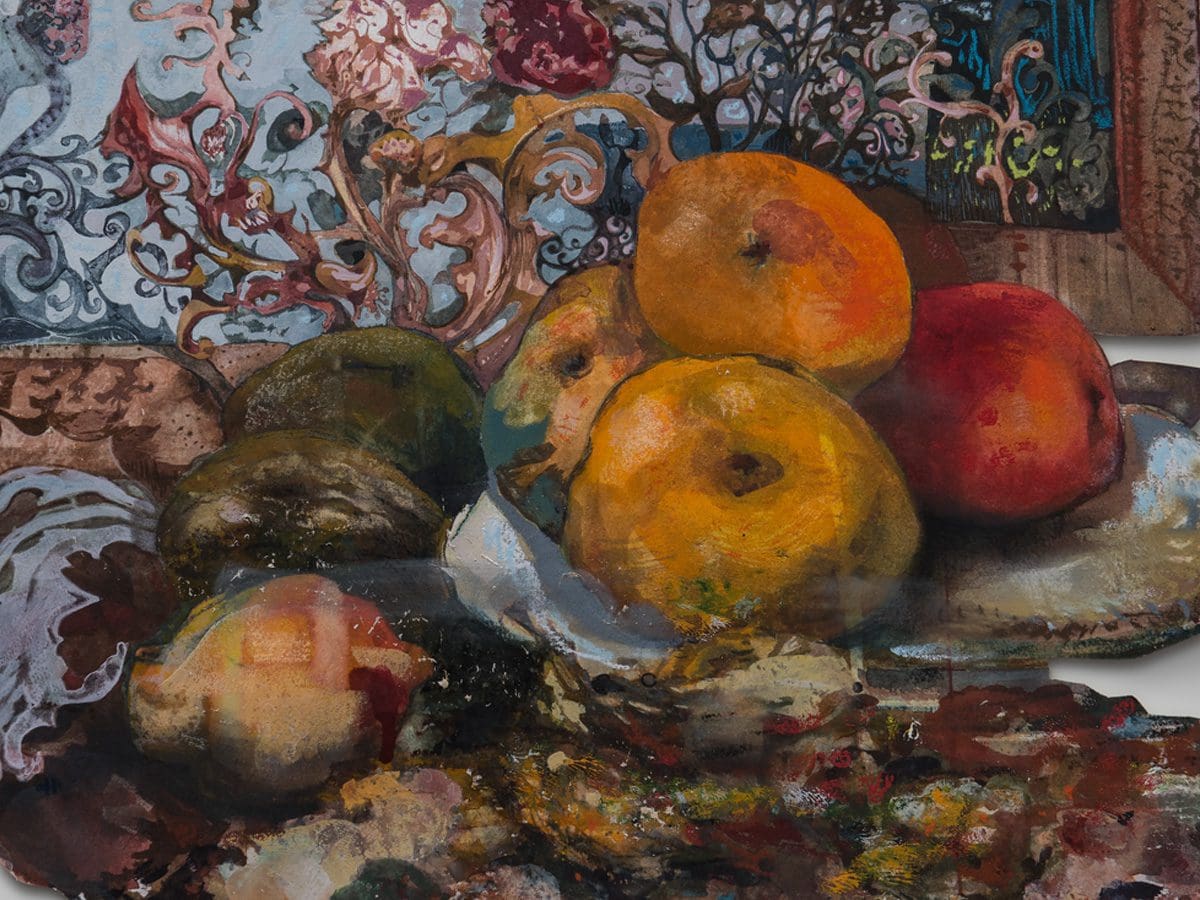
The lower half of the image thickens into botanical density: acanthus-like scrollwork, vines, leaves, roots, and tangled growth rendered in ochre and burnt sienna. A tree rises. Water stretches below. A stone or mountain seems to push upward through the centre of the work like a geological event interrupting the human form. Here, the natural world intensifies as the body depletes. Life transfers from one vessel to another.
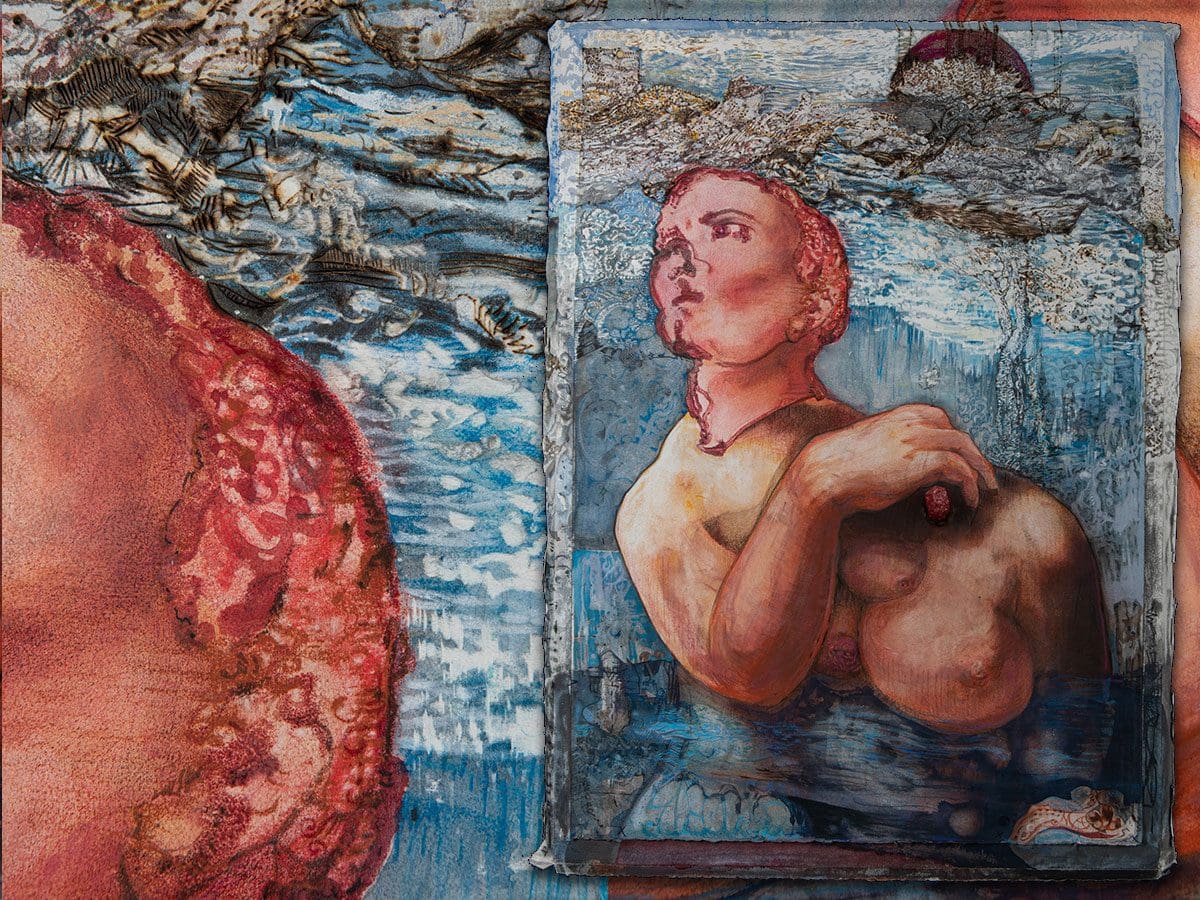
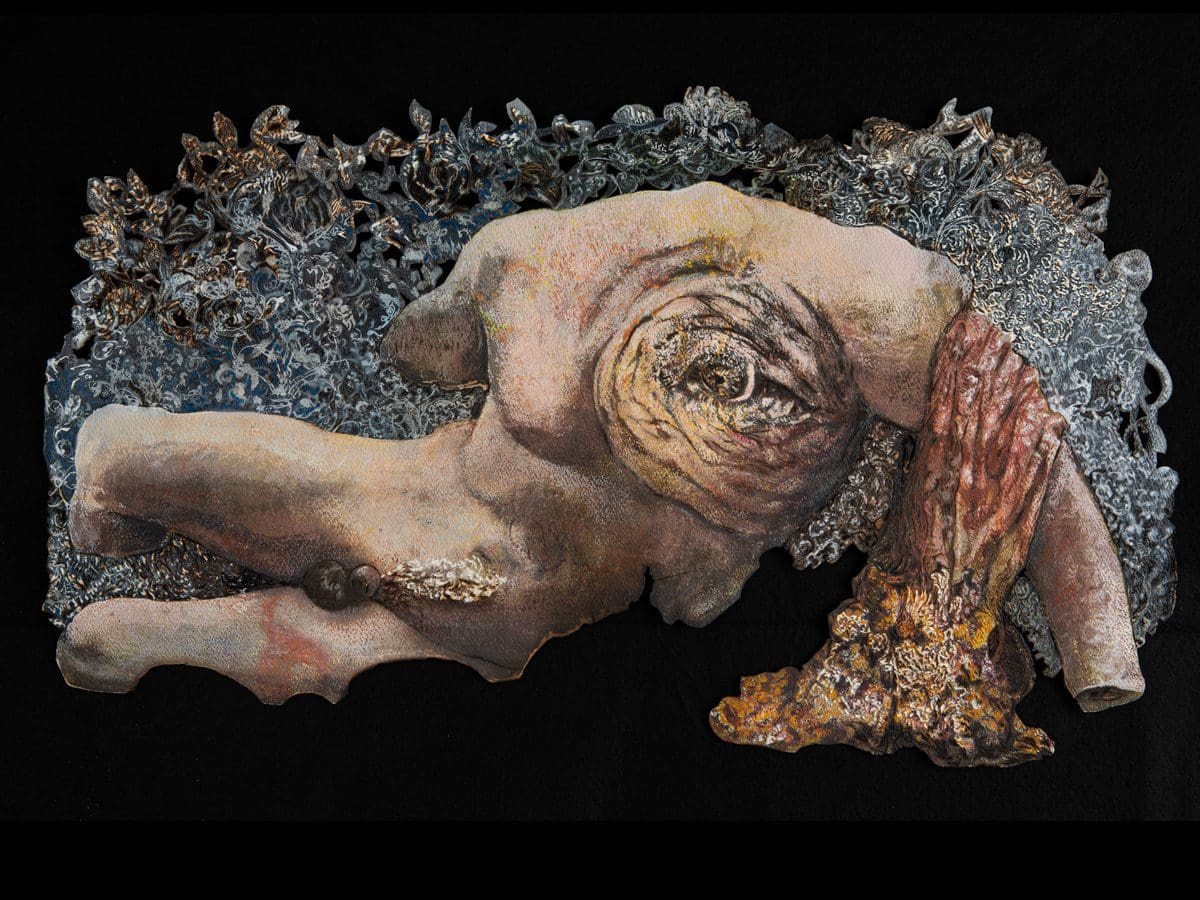
The surface as a whole reads as palimpsest. Every inch carries the residue of earlier states. The wooden support extends this condition. Burned, stained, carved, and marked with charcoal, it functions as part of the image rather than a border around it. In installation, the work projects outward from the wall, casting a heavy shadow. The paper bulges and warps. The edges remain ragged. The object asserts its physical presence even as the figure on its surface loses coherence.
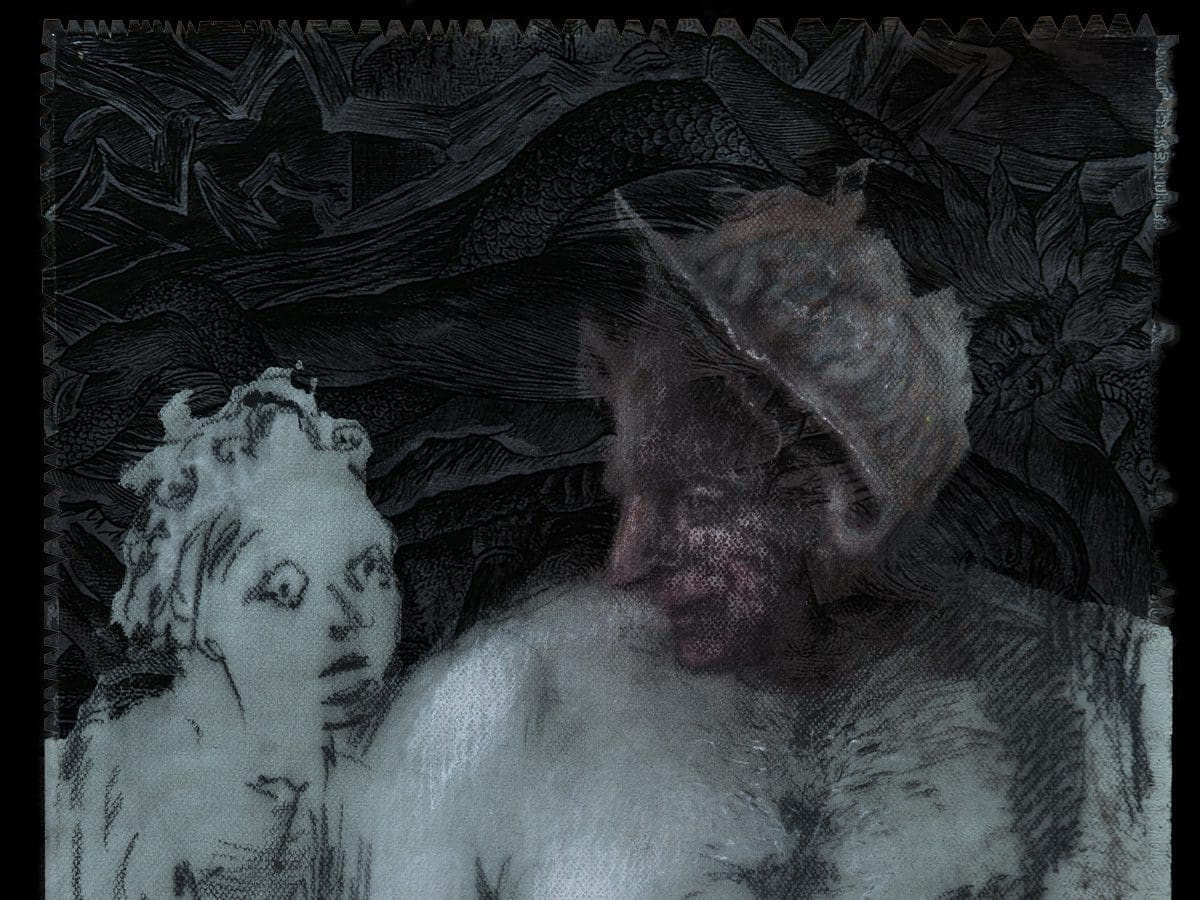
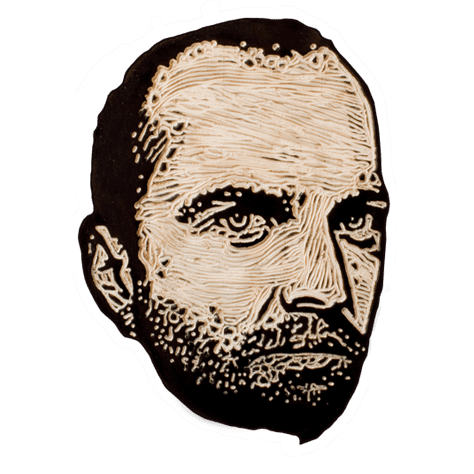
The hidden charcoal drawing beneath was once an independent work. When The Disappearing Man required mounting, the two were joined. Time has turned that practical solution into the work’s deepest structural truth. The front image deteriorates. The older image beneath rises through the loss. Two histories now occupy one object, and each becomes visible through the other. The piece does not simply fade. It yields.
Within Milo’s larger body of work, The Disappearing Man occupies a singular place. Other works are revised, repainted, or preserved through active intervention. This one has been allowed to enter a slower and harsher condition. It has been given over to time. Years of handling, reworking, and decay have brought it to the threshold of absence. The paper turns toward dust. The figure nearly disappears. Yet the work continues to become. It moves from one image into another, dying on one side and being born on the other.
Milo has said that this work makes him uneasy. That response feels right. The Disappearing Man is a portrait of what happens when an artist stays with an image long enough to watch it leave.